
True intelligence means remembering Allah
“True intelligence is measured by a person's relationship with Allah.”
True intelligence is living with continual remembrance of Allah, especially through specific dhikr after the five prayers and before sleep, which nourishes faith, calms the heart, and leads toward Paradise.
The khutbah in 6 steps
- Reframes intelligence as remembering Allah and reflecting on creation rather than worldly status.
- Explains dhikr as spiritual nourishment, gratitude, and a source of peace during hardship.
- Uses Fatimah's example to teach Tasbih Fatimah and explain Subhanallah, Alhamdulillah, and Allahu Akbar.
- Presents post-prayer and bedtime dhikr routines with specific counts and promised rewards.
- Urges listeners to replace phone scrolling with remembrance after prayer and before sleep.
- Closes with prayers for Muslims worldwide, including those in Gaza.
In the khateeb's words
“True intelligence is measured by a person's relationship with Allah. A person of intelligence is someone who remembers Allah in every single circumstance.”
“Just as the physical body requires nourishment to stay healthy, the spiritual body also requires nourishment to stay healthy. And the nourishment of our souls is the remembrance of Allah.”
“That after my five daily prayers, after saying salam, I'm not going to pull out my phone and start scrolling.”
For the dinner table
The khutbah taught that real intelligence is not just education or status; it is remembering Allah and reflecting on His creation. Dhikr nourishes the heart and can bring peace during stress, exhaustion, and hardship. The speaker explained Subhanallah, Alhamdulillah, and Allahu Akbar, and shared the Prophet's advice to Fatimah to say them before sleep. He encouraged us to spend a few moments after each prayer and before bed in dhikr instead of reaching for our phones. The family takeaway is to start these small habits today and keep our hearts connected to Allah.
- What does being intelligent mean in this khutbah beyond getting good grades?
- Which dhikr phrase would help you most when you feel worried, tired, or grateful?
- What could we change about our after-prayer or bedtime phone habits this week?
More like this
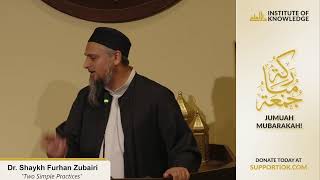 IOK · Diamond Bar, CA · Nov 14, 2026Remember Allah in two daily routines“If you engage in this remembrance of Allah subhanahu wa ta'ala, it's going to ease your burdens.”
 ICOI · Irvine, CA · Nov 14, 2026The Day of Judgment should change us“Never confuse Allah giving you time with Allah approving of what you are doing.”Death & the hereafter

We are given one more chance to wake up.5:08MCF · Folsom, CA · Nov 21, 2026Fajr brings barakah to the whole day
The Qur'anic paradigm for intelligence is completely different.15:06ICOI · Irvine, CA · Nov 7, 2026Remembering Allah brings comfort and reward

The khutbah is part of jum'ah, not the waiting room or the warm-up before salatul jum'ah.23:22Daleel Islamic Association · Scarborough, ON · Nov 21, 2026Prioritize worship by arriving early

The remembrance of Allah subhanahu wa ta'ala is something very powerful.9:18ISCN · Corona, CA · Oct 24, 2026Knowing Allah makes worship joyful