
Help vulnerable people before they ask
“You can't respond to today's problems with yesterday's devices.”
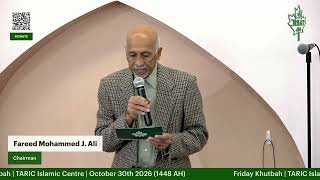
Muslims should proactively and mercifully serve vulnerable new Muslims and youth, especially amid digital addiction, rather than judging them or waiting for them to seek help.
The khutbah in 5 steps
- Defines vulnerability as context-dependent while highlighting new Muslims and youth as urgent groups.
- Calls believers to spread peace by actively seeking and helping vulnerable people.
- Urges patient follow-up and gentle guidance for new Muslims, avoiding harshness and alienation.
- Warns that digital platforms target youth and calls parents and communities to protect their spiritual health.
- Closes by rejecting the idea of throwaway people and inviting support for mental-health and addiction services.
In the khateeb's words
“You can't respond to today's problems With yesterday's devices Yesterday's interventions We have to be very clever Very innovative”
“you will not enter Jannah until you believe and you will not believe until you love one another”
For the dinner table
The khutbah teaches that serving vulnerable people is a central way to live our faith, and that vulnerability can look different in each time and place. It highlights new Muslims who need patient follow-up, friendship, and an easy path into community life. It also warns that young people are being targeted by addictive digital platforms, so parents and communities must be proactive about protecting their hearts and offering meaningful care. The story of Abu Mahdura shows how the Prophet responded to resistance with wisdom, compassion, and responsibility rather than humiliation. The message for our family is to notice people who are struggling, refuse to treat anyone as disposable, and take one practical step to help.
- Who might be vulnerable or left out in our school, neighborhood, or masjid right now?
- What device rule or family activity could help protect our hearts this week?
More on Youth & education
 Muhammadi Masjid · Elmont, NY · Sep 25, 2026Parents must teach Islam at home“You have to save yourself and then you have to save your family from the fire of Jahannam.”
It starts at home by presenting the real role model for our children.29:05TARIC · Downsview, ON · Oct 31, 2026Parents shape their children's faith
 ICOPS · Lynnwood, WA · Oct 17, 2026Parents must teach children Islam