
Teach children faith through daily example
“Don't let this dunya distract you from Allah and the deen.”
The khutbah argues that Muslims should respond to global suffering through repentance, prayer, and practical help, while urgently nurturing children’s faith through parental example and active mosque involvement.
The khutbah in 5 steps
- Describes global Muslim suffering and urges practical assistance, advocacy, volunteering, and sincere prayer.
- Links calamities to sins and calls listeners to repentance and avoiding wrongdoing.
- Warns parents against delaying religious education, prayer, modesty, and moral formation.
- Uses Imam al-Shafi'i and his mother as an example of effective nurturing.
- Closes with a call to repent, prioritize children, attach them to the mosque, and act now.
In the khateeb's words
“Today you must do tawbah today. Before your children are gone. Do tawbah today.”
“Don't let this dunya distract you from Allah and the deen.”
For the dinner table
The khateeb reminded us to care about Muslims facing hardship, sharing a doctor's account of children in Palestine struggling to bring water home. He urged us to help however we can, make sincere du'a, and examine our own actions and seek Allah's forgiveness. He also asked parents to give children time, teach Islamic values early, and show through their own routines that prayer and faith matter alongside school and work. He described young people as having great power to do good and called on the community to support and volunteer in masjid programs. Through the story of Imam Shafi and his mother, he reminded us that a caregiver's loving effort can benefit people for generations.
- What is one way our family could help people facing hardship this week?
- What would you enjoy doing together that helps us learn about our faith?
- What talent would you like to use to help someone at the masjid?
More on Youth & education
 Muhammadi Masjid · Elmont, NY · Sep 25, 2026Parents must teach Islam at home“You have to save yourself and then you have to save your family from the fire of Jahannam.”
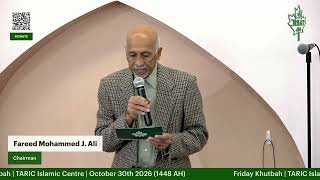
It starts at home by presenting the real role model for our children.29:05TARIC · Downsview, ON · Oct 31, 2026Parents shape their children's faith
 ICOPS · Lynnwood, WA · Oct 17, 2026Parents must teach children Islam