
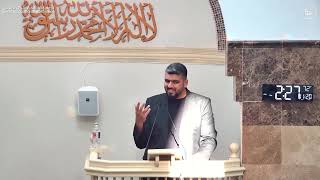
Repentance & taqwaFrom the masjid's own video, Nov 7, 2026.
Repentance brings forgiveness and ease
“Allah will forgive you and love you.”
In one sentence
The khutbah teaches that repentance, trust in Allah, consultation, ethical conduct, and perseverance through hardship open the way to Allah’s forgiveness and ease.
The khutbah in 5 steps
- Musa’s accidental killing leads to remorse, repentance, and Allah’s forgiveness.
- Adam and Eve’s repentance is contrasted with Iblis’s arrogant refusal to admit wrongdoing.
- Musa’s flight shows trust in Allah, consultation, and turning to Allah under threat.
- His encounter at Midian teaches respectful interaction, modesty, gratitude, and service.
- The khutbah closes by urging repentance, good character, gratitude, and confidence that hardship will be followed by ease.
Try this week
When you make a mistake, acknowledge it before Allah, seek forgiveness, and make tawbah rather than defending it.
Consult trustworthy people before making important decisions.
Keep interactions between men and women respectful, modest, purposeful, and to the point.
Choose people for responsibilities based on both competence and trustworthiness.
Continue helping others and protecting your character even when you lack security or resources.
Acknowledge Allah’s blessings, ask Him directly for help, and sincerely make the dua “Rabbi inni lima anzalta ilayya min khayrin faqir.”
Quotes
In the khateeb's words
“This is called a mini mashurah Musa alayhis salam took his advice and heeded to that and this is a mini consultation”
“whenever we make a mistake turn to Allah in remorse and in tawbah in repentance Allah will forgive you and love you”
“do good in this life even if things are hard Yusuf was in jail he still helped them interpret the dream Musa has no shelter no food no family yet he still helped the two young ladies”
Talk about it at home
For the dinner table
Today’s khutbah teaches that hard seasons do not mean Allah has abandoned us. From Musa’s story, we learn to admit mistakes, ask forgiveness, trust Allah, consult wisely, and keep helping people. We should be respectful and modest in our interactions, and we should value both ability and trustworthy character when choosing someone for responsibility. Even when we feel poor, afraid, or alone, we can notice Allah’s blessings and keep our principles. Allah can bring ease after hardship.
- When something goes wrong, what could you say to Allah?
- Who is one trustworthy person you can ask for advice?
- How can you help someone this week, even if you are having a hard day?
Keep listening
More like this
You will learn more about Allah perhaps and yourself in that time of silence and isolation than you have in a long time.28:35Collins Musallah · Richardson, TX · Nov 21, 2026Turn back to Allah and find Him near

Every time we make a mistake, we need to acknowledge our wrongdoings.13:20ICGC · West Chester, OH · Nov 7, 2026Repent and trust Allah when life gets hard
 ICGC · West Chester, OH · Nov 21, 2026Faith calls us to resist Islamophobia“We don't turn Islamophobic against ourselves.”Civic engagement
 ICC · Pomona, CA · Nov 14, 2026Turn back to Allah while you can
Allah promises that after hardship, He will make ease.2:20ICGC · West Chester, OH · Nov 6, 2026Trust Allah through hardship and serve othersFamily & marriage

We do not need to engage in the haram to have fun.27:00Masjid Fulton · Sacramento, CA · Nov 21, 2026Let Islam reshape everyday choices