
Youth & educationFrom the masjid's own video, Aug 28, 2026.
Raise children with love and guidance
“Show your children that you are proud of them.”
In one sentence
The Prophet Muhammad’s example teaches parents to transform grief into faith and raise children through affection, specific praise, constructive correction, and respectful companionship.
The khutbah in 4 steps
- Examines his loving treatment of children and relatives, including affirming daughters and grandchildren.
- Teaches parents to praise specific good behavior and correct mistakes by explaining what to do next time.
- Applies Quranic standards of ihsan, gratitude, ma'ruf, and companionship to parent-child relationships.
- Closes with prayers for oppressed communities and remembrance of the Prophet.
Try this week
Praise the specific good action a child performed instead of relying only on general labels.
When correcting mistakes, explain what to do next time rather than repeatedly asking why it happened.
Tell children you are proud of them and acknowledge what they did well, including daughters.
Express gratitude openly to parents and build a respectful, companionable relationship with them.
Use hardship and grief as opportunities to draw closer to Allah while maintaining faith.
Sources the khateeb cited
Sahih MuslimIllustrated the Prophet’s affirmation of al-Hasan and the value of reconciliation.
Quotes
In the khateeb's words
“pain is what happens suffering is your reaction to it so we find the Prophet sallallahu alayhi wa sallam took the pain in a beautiful way and taught us how to take pain”
“show your children that you are proud of them if you speak when they do wrong speak when they do right”
“so you talk about the future you talk about what you want and you avoid putting the child down”
Talk about it at home
For the dinner table
The khutbah teaches that the Prophet Muhammad experienced deep grief, including losing several children, yet responded with faith, tears, patience, and closeness to Allah. His example also shows how to care for children with affection and dignity. Parents should praise specific good actions, express pride, and explain what children can do better next time instead of constantly criticizing them. Families should practice gratitude, mercy, good conduct, and respectful companionship in their relationships.
- How can we correct someone without making them feel small?
- What is one good thing someone in our family did recently that we should praise?
- How can our family show gratitude and mercy this week?
Keep listening
More on Youth & education
 Muhammadi Masjid · Elmont, NY · Sep 25, 2026Parents must teach Islam at home“You have to save yourself and then you have to save your family from the fire of Jahannam.”
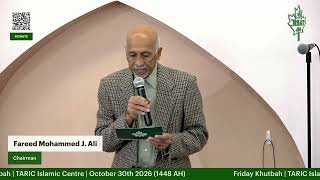
It starts at home by presenting the real role model for our children.29:05TARIC · Downsview, ON · Oct 31, 2026Parents shape their children's faith
 ICOPS · Lynnwood, WA · Oct 17, 2026Parents must teach children Islam