
Raise daughters to preserve Islamic knowledge
“The raising of our daughters with intent and with seriousness, with real investment in their akhlaq and in their adab and in their education.”
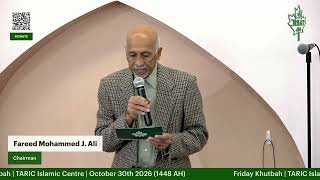
Raising children, especially educating and investing in girls and women’s scholarship, is a divinely entrusted responsibility and the foundation for preserving Islamic knowledge across generations.
The khutbah in 6 steps
- Allah’s trust includes raising the next generation and intentionally developing daughters’ character, manners, and education.
- Qur’anic qualities are addressed equally to believing men and women, who support one another in faith and responsibility.
- Stories of the mothers of Imam al-Shafi‘i, Shaykh Abdul Qadir Jilani, Musa, and Ismail illustrate mothers’ formative influence.
- Aisha’s scholarship and contemporary female scholars demonstrate women’s essential role in preserving and transmitting Islamic knowledge.
- Families should cultivate understanding of Allah, the Prophet, Islamic beliefs, and worship among both boys and girls.
- The khutbah concludes by promoting local tahfiz and Islamic studies programs, especially those taught by female scholars, and reminding parents of their accountability.
In the khateeb's words
“And among the greatest of these trusts is the raising of the next generation, is the raising of our daughters with intent and with seriousness, with real investment in their akhlaq and in their adab and in their education.”
“and so you see that, we learn, and we know that the first madrasa, the first school, where a child grows, is the lap of his mother”
“women have equal rights to scholarship, and we should have them preserve ilm.”
“We don't want them to just mimic actions and motions. We want them to understand what it is that they are doing when they pray their salah.”
For the dinner table
Today’s khutbah reminded us that raising children is a trust from Allah, and that mothers, wives, and daughters are central to building strong families and communities. The khateeb shared examples of mothers whose faith, honesty, sacrifice, and guidance shaped remarkable people. He also highlighted Aisha and contemporary female scholars as important preservers and teachers of Islamic knowledge. Parents were encouraged to give both boys and girls a strong Islamic identity rooted in understanding, not imitation alone. Local Qur’an memorization and Islamic studies programs can help families fulfill this responsibility.
- What is one Islamic habit you learned by watching someone at home?
- Which quality, truthfulness, patience, prayer, charity, or humility, would you like to strengthen this week?
- How could our family make Qur’an and Islamic learning easier for both boys and girls?
More on Youth & education
 Muhammadi Masjid · Elmont, NY · Sep 25, 2026Parents must teach Islam at home“You have to save yourself and then you have to save your family from the fire of Jahannam.”
It starts at home by presenting the real role model for our children.29:05TARIC · Downsview, ON · Oct 31, 2026Parents shape their children's faith
 ICOPS · Lynnwood, WA · Oct 17, 2026Parents must teach children Islam