
Righteous women protect faith and family
“If we raise a girl, we raise a family.”
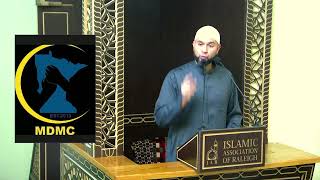
The khutbah teaches that righteous womanhood is expressed through obedience to Allah, lawful marital responsibility, care for family, protection of household dignity, and generosity toward the vulnerable.
The khutbah in 6 steps
- Aisha is presented as preserving the Prophet’s domestic example and teachings.
- The speaker explains saliha as a woman aligned with fitrah, obedient to Allah and her husband.
- The exchange with Asma frames household care and marital service as spiritually meaningful responsibilities.
- A righteous wife is described as bringing joy, obeying in permissible matters, and protecting chastity, property, and reputation.
- Fatimah and the feeding of the poor, orphaned, and captive illustrate selfless generosity.
- The sermon says raising girls shapes families and closes with prayers for oppressed communities.
In the khateeb's words
“whenever you look at your wife you remember MashaAllah taking care of the house you did this you did that so you feel happy with your wife”
“if we raise a boy we raise an individual if we raise a girl we raise a family”
For the dinner table
The khutbah teaches that a righteous woman is known not only by appearance but by obedience to Allah, good character, care for her family, and protection of her household’s dignity. It praises women around the Prophet, especially Aisha, Asma, and Fatimah, and presents domestic care as meaningful service. It also reminds us to feed orphans, the poor, and captives even when we have little, seeking Allah’s pleasure rather than thanks. The sermon closes by saying that raising a girl helps shape a whole family and by praying for safety and relief for oppressed people.
- What makes someone’s character more important than appearance?
- How can our family show care to someone who has less than we do?
- What responsibility comes with helping shape a family?
More on Family & marriage
Don't let a moment of disagreement turn into conflict where years of good are forgotten like that.14:45IAR Atwater · Southwest Raleigh, NC · Oct 31, 2026Protect relationships when disagreements arise
 EPIC · Plano, TX · Oct 30, 2026Honor your mother while you still can“Call sometimes just because you want to hear her voice.”

We cannot have disrespectful parents disrespecting each other in the presence of their kids.22:41UMMA · Southfield, MI · Sep 19, 2026Faith shows in how we treat family