
Divorce must be handled with care and fairness
“Don't put your kids in the middle.”
Divorce may be permitted for valid reasons, but Islam requires it to be handled with God-consciousness, kindness, fairness, privacy, and protection of children.
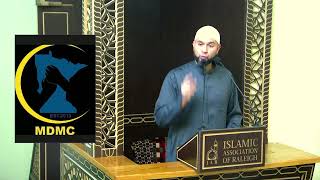
The khutbah in 7 steps
- Introduces adab al-talaq, the Islamic etiquette of divorce.
- Explains taqwa, valid reasons, idda, reconciliation, and not expelling a wife after the first or second talaq.
- Covers Sunnah timing and avoiding divorce during menstruation, after intercourse, or in anger.
- Details mahr, maintenance, mut'ah, inheritance, and rights after different forms of talaq.
- Warns against arranged halala, withholding mahr, and bypassing family mediation.
- Urges parents to protect children, preserve privacy, and avoid social-media exposure.
- Closes with prayers for Muslim homes, the sick, the deceased, and suffering Muslims.
In the khateeb's words
“Even if you don't agree on something, have ikhtilaaf, dispute nicely and wisely.”
“during the time of ida, during the three months, you have to spend on her. She's still your wife.”
“don't put your kids in the middle they didn't do anything wrong to punish them because of their mom”
“you are not a man if you talk about the mother of your kids don't mention her in the bad way”
For the dinner table
The khutbah taught that divorce can be allowed when a marriage cannot continue, but it must be handled with God-consciousness, dignity, and fairness. The speaker stressed that during the first or second divorce, reconciliation may still be possible, and financial rights should be honored. Parents must keep children out of the conflict, continue supporting them, and never use custody or private information as weapons. Even after separation, spouses should speak respectfully and remember the good they shared. The khutbah ended by asking Allah to protect Muslim homes, heal the sick, forgive the deceased, and help suffering Muslims.
- How can we keep a family disagreement from pulling children into the middle?
- Why should private family matters stay private online?
- What does kindness look like when people no longer agree?
More on Family & marriage
Don't let a moment of disagreement turn into conflict where years of good are forgotten like that.14:45IAR Atwater · Southwest Raleigh, NC · Oct 31, 2026Protect relationships when disagreements arise
 EPIC · Plano, TX · Oct 30, 2026Honor your mother while you still can“Call sometimes just because you want to hear her voice.”

We cannot have disrespectful parents disrespecting each other in the presence of their kids.22:41UMMA · Southfield, MI · Sep 19, 2026Faith shows in how we treat family