
Islam requires justice between spouses
“I need to be treated better.”
Islam confronts marital and social injustice by affirming women’s voices, requiring mutual rights and good treatment, and encouraging communal and civic responsibility.
The khutbah in 6 steps
- Frames the khutbah through a woman appealing against marital injustice.
- Explains how Islam gave marginalized people a voice and challenged entrenched customs.
- Presents religious, intellectual, and political reform as dimensions of the Prophet’s transformation.
- Contrasts Islamic rights with historical hierarchies concerning women, non-Greeks, and slaves.
- Applies the message to domestic abuse, elder neglect, civic participation, and community responsibility.
- Closes with calls to know one’s rights, reject injustice, plan for elder care, and strengthen faith.
In the khateeb's words
“This woman has been taken by Islam to a level where she recognizes I have a right. I'm a human being. I need to be treated better.”
“The voice of a woman is much stronger because Allah has heard it.”
“save some money for that purpose don't give all of your money to your children while you are alive you may need it”
For the dinner table
Brother Saleem shared the story of a woman who spoke up about injustice in her marriage and emphasized that Allah heard her complaint. He explained that Islam gave people who were mistreated a voice and a right to seek justice. He reminded us that marriage should bring comfort to both partners, and that mistreatment can hurt through words and threats as well as physical violence. He encouraged us to begin at home by honoring the rights of the women in our families and caring for older relatives with dignity. His message invites us to listen carefully, treat one another fairly, and help people who are suffering be heard.
- What can we do to help someone feel safe telling us that something is wrong?
- What is one way each of us can make our home more comforting for everyone?
- How can we show older relatives that their needs and choices matter?
More on Family & marriage
Don't let a moment of disagreement turn into conflict where years of good are forgotten like that.14:45IAR Atwater · Southwest Raleigh, NC · Oct 31, 2026Protect relationships when disagreements arise
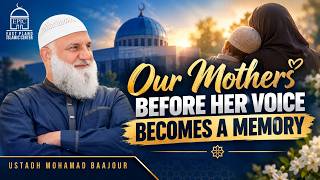 EPIC · Plano, TX · Oct 30, 2026Honor your mother while you still can“Call sometimes just because you want to hear her voice.”
We cannot have disrespectful parents disrespecting each other in the presence of their kids.22:41UMMA · Southfield, MI · Sep 19, 2026Faith shows in how we treat family