
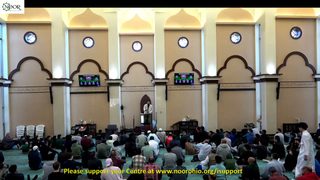
Character & conductFrom the masjid's own video, Oct 31, 2026.
Adults must choose their influences
“Peer pressure is an issue that is just as applicable to adults as it is to children.”
The khutbah in 5 steps
- Validates parental concern about peer pressure and reframes it as adult social pressure.
- Explains social proof and how friends, workplaces, and social media normalize behavior.
- Applies the principle to backbiting, distinguishing it from slander and emphasizing its seriousness.
- Presents three responses to backbiting: defend the victim, speak against it, or reject it and leave.
- Closes with supplication for recognizing good, avoiding evil, and relief for suffering communities.
Try this week
Audit which friends, platforms, workplaces, and routines influence your behavior.
When backbiting occurs, defend the absent person if possible.
If you cannot defend them, say clearly that the behavior is wrong.
If you cannot speak up, reject the wrongdoing inwardly and leave the gathering.
Quotes
In the khateeb's words
“the issue of peer pressure is an issue that is just as applicable to adults as it is to children”
“The only question is, are we number one, aware of it? And number two, are we understanding of what is influencing us?”
“Either number one, the best option, is that you defend the one who is being backbitten.”
“We want to live the message of Islam, not just preach the message of Islam.”
Talk about it at home
For the dinner table
Peer pressure does not only affect children; adults can also be shaped by friends, workplaces, media, and whatever they repeatedly see. The sermon reminds us to notice who and what is influencing us, especially when wrong behavior begins to feel normal. When backbiting happens, we should defend the absent person, speak up against the wrongdoing, or protect our hearts by leaving. Parents teach most powerfully by living Islam at home, praying Fajr, telling the truth, admitting mistakes, and trying again. Our goal is to recognize good as good, avoid evil, and become a force for good in our homes and communities.
- What is one influence in your life that helps you become a better person?
- What could you say or do if people begin talking badly about someone who is absent?
- How can a parent or child show Islam through actions at home?
Keep listening
More on Character & conduct

The strong is the one who controls himself while in anger.10:16Masjid Al-Noor · Waterloo, IA · Oct 31, 2026Control anger before it causes harm

Lowering your gaze is cleaner to your heart and fulfilling the amanah that Allah gave you.1:03:23Rahma Center · Lake Forest, CA · Oct 30, 2026Every trust from Allah must be honored
Arrogance is to reject the truth and to look down on people.9:13NICC · Dublin, OH · Oct 30, 2026Humility means accepting truth and honoring people