
Why Muslims should reject Halloween
“When a person worships Allah, they're avoiding sin.”
Muslims should evaluate Halloween and other cultural practices through a lived Islamic worldview rather than isolated legal loopholes, preserving their fitrah, identity, and principles by refusing participation.
The khutbah in 5 steps
- Frames Halloween through Anton LaVey's interpretation and reframes it as a question of Muslim cognition.
- Distinguishes LaVeyan and theistic Satanism, linking both to self-worship and unchecked desire.
- Uses Quranic stories and hadith to contrast worshipping Allah with following the nafs and gradually approaching sin.
- Critiques reducing Halloween, Christmas, images, and customs to isolated halal-and-haram questions while neglecting the spirit of Sharia.
- Concludes by urging awareness, divestment, and public solidarity regarding suffering in Palestine and Sudan.
In the khateeb's words
“Because when a person worships Allah, they're avoiding sin. The moment a person does a sin, they are worshipping themselves.”
“It's up to you and I to be the bulwark. We have to stand up and say that, no, we are not going to participate.”
For the dinner table
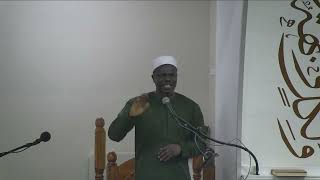
Imam Bilal used Halloween to ask a bigger question: how should our faith guide the way we think and make choices? He urged Muslims to avoid participating and to hold firmly to their identity, even when they feel pressure to fit in. Through the story of Adam and the tree, he encouraged listeners to keep away from paths that can lead to wrongdoing and to put Allah’s guidance before personal desires. He also reminded us that religious practice should grow from love for Allah and His Messenger, with attention to the spirit of the teachings as well as their rules. He ended by calling attention to suffering in Sudan and asking Muslims to raise awareness and care for those affected, alongside their concern for Palestine.
- When have you felt pressure to fit in, and what helped you decide what to do?
- What is something about being Muslim that makes you feel proud or grateful?
- What could we do together this week to learn about and help people suffering in Sudan?
More on the Islamic calendar
 7:52Dar Alnoor · Manassas, VA · Jul 11, 2026Use summer to grow closer to Allah“This opportunity can make me a great Muslim, a great human being, or it can make me a very bad person, depending on how we use the summer.”
Never miss a salah during this free time.16:04Muslim Neighbour Nexus · Mississauga, ON · Jul 25, 2026Use summer time for what matters
 EPIC · Plano, TX · Jul 3, 2026Honor Muharram through fasting and justice“We cannot even enter into Jannah if I have violated someone else's rights.”