
Praise Allah in every condition
“The more we know of Allah is the more we'll praise Him.”
Alhamdulillah, praising Allah in every condition, good or bad, is the believer's first and last word, and training ourselves to live as people of hamd fills our scales and sustains us through every trial.
The khutbah in 8 steps
- Opening praise, taqwa verses, and invitation to imagine a person who lived 60-70 years in ease but died without ever worshipping Allah
- Gratitude contrast: believers know they belong to Allah and are returning to Him, so they prepare
- Life's multiple purposes, worship, being tested, following the Messenger, taqwa, all rest on knowing who Allah is
- Alhamdulillah as Adam's first word, the Quran's opening, and the final words of the people of Jannah
- The Prophet's morning dua of praise and the hadith that Alhamdulillah fills the scales
- The man in salah whose words of praise were competed over by thirty-plus angels
- Hamd vs. shukr: praise belongs to Allah in all conditions, unlike gratitude tied to specific blessings
- Two keys from Shaykh al-Islam for becoming people of hamd, applied to Surah al-Buruj and Gaza, closing with the two questions (does Allah know, can He act) and dua
In the khateeb's words
“The more we know of Allah is the more we'll praise Him. The more we know of Allah is the more we'll fear Him. The more we know of Allah is the better we'll worship Him.”
“Because when we say Alhamdulillah, we are acknowledging, oh yeah Allah, whatever goodness, whatever happens, it is from you.”
“For the people of Hamd. And these people are the ones who say Alhamdulillah in all conditions. Regardless if it's something favorable or something that we don't like.”
“Because just as those believers ended up with a supreme success, so shall we, if we hold on to that belief.”
For the dinner table
The khateeb taught that Alhamdulillah is the believer's first word and last word, Adam said it first, the Quran opens with it, and the people of Paradise will close with it. He asked us to imagine a person who enjoyed a whole lifetime of blessings but never worshipped Allah even once, to help us feel how enormous the gift of iman really is. He explained that praising Allah is not the same as thanking Him: thanks is for blessings we like, but praise belongs to Allah in every condition, even hardship. When life hurts, whether a personal problem or the suffering of Muslims in places like Gaza, we can hold onto two certainties: Allah knows about it, and He is able to do something about it. He challenged us to practice saying Alhamdulillah from the heart over small daily annoyances so we grow strong enough to say it in the big storms too. He prayed that Allah makes us people of hamd whose praise fills up their scales.
- What is one blessing you enjoy every day without even noticing, like the air you breathe?
- Can you think of a hard moment when you could still say Alhamdulillah? What would make that difficult?
- What is one small annoying thing this week you could use to practice saying Alhamdulillah?
More on Gratitude
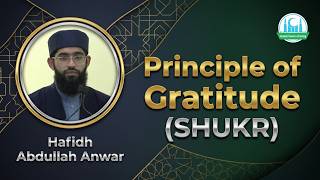 ICI · Irving, TX · Oct 24, 2026Thank Allah in ease and hardship“Even in moments of difficulty, when it feels like there's nothing going your way, there is always something to be grateful for.”
Either we're receiving a blessing, which calls for shukr, or we're going through a hardship, which calls for sabr.13:29Al-Ittehad · Vista, CA · Sep 19, 2026Gratitude and patience carry believers through life
Real gratitude is not a feeling.16:14London Muslim Mosque · London, ON · Sep 11, 2026Gratitude means using blessings well