
The Quran calls us to follow Sunnah
“If we obey Rasulullah, we will be rightly guided, gain the pleasure of Allah and be admitted into paradise.”
Because the Quran repeatedly commands obedience to Allah’s Messenger, Muslims must treat the Prophet’s Sunnah as binding guidance even when personal desires or contemporary norms make it difficult.
The khutbah in 6 steps
- Frames following the Sunnah as essential amid secular pressures and hostility toward Islam.
- Introduces Surah An-Nur’s opening as a reminder that its commands are divinely sent and binding.
- Contrasts hypocritical refusal with believers’ response of hearing and obeying Allah and His Messenger.
- Connects obedience to the Prophet with guidance, Allah’s pleasure, security, and mercy.
- Uses the closing verses of Surah An-Nur and hadith to portray disobedience as refusing Paradise.
- Calls listeners to reject worldly distractions, follow the Sunnah, and seek truth from Allah.
In the khateeb's words
“If you obey him, you shall be admitted into Jannah. Disobey him and you are refusing that invitation.”
“We have to look within ourselves and take a moment to decide whether we accept the invitation of Rasulullah and of Allah.”
“The ultimate prize awaits us in the hereafter. So do not wait until it's too late to accept the truth and to follow the sunnah of Rasulullah s.a.w.”
For the dinner table
The khutbah teaches that following the Quran includes following the Prophet Muhammad’s example, or Sunnah. It says Surah An-Nur reminds believers that Allah’s commands remain guidance even when society or our own feelings find them difficult. True faith is shown by listening, obeying, and letting Allah and His Messenger guide our choices rather than putting personal preference first. The speaker encourages us to examine ourselves, learn the Sunnah, and keep the hereafter more important than worldly distractions. Following the Prophet is presented as a path to guidance, mercy, and Paradise.
- What kinds of things can distract us from remembering the hereafter?
- What does “we hear and we obey” mean in everyday family life?
More on Qur'an & tafsir
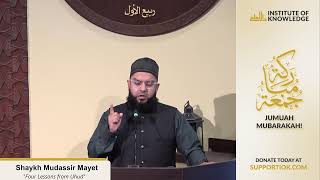 IOK · Diamond Bar, CA · Oct 24, 2026Do right despite the consequences“Doing the right thing is going to be the right thing, regardless of whether there are negative or positive consequences after.”
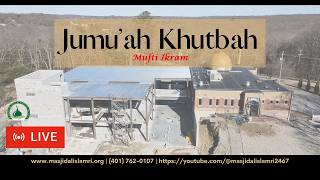 Masjid Al-Islam · North Smithfield, RI · Oct 17, 2026Every deed will be revealed“The earth will speak and what will it speak about?”
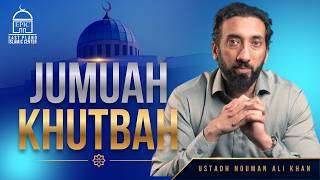 EPIC · Plano, TX · Sep 26, 2026The Quran teaches us to stop rumors“Your job and my job is to crush those flames.”