
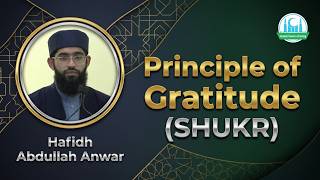
GratitudeFrom the masjid's own video, Oct 3, 2025.
Gratitude strengthens faith in hard times
“Shukr is one of the most fundamental aspects of Islam.”
In one sentence
In testing times, Muslims should cultivate shukr through the heart, tongue, and limbs so gratitude strengthens faith, patience, service, and hope.
The khutbah in 6 steps
- Frames hardships in Palestine and Muslim communities as a call to return to gratitude.
- Defines shukr as choosing gratitude rather than ingratitude and adopting an attitude of gratitude.
- Explains three forms of shukr: the heart, the tongue, and the limbs.
- Recommends daily practices including dhikr, gratitude upon waking, prostration, and gratitude during difficulty.
- Connects gratitude with patience, modest expectations, service, reduced materialism, and divine increase.
- Concludes with a story of a disabled old man whose gratitude and patience were rewarded in Paradise.
Try this week
Say Alhamdulillah with sincere awareness that blessings come from Allah.
Begin the day by thanking Allah for restoring life after sleep.
Use dhikr and regular prayer to maintain awareness of Allah's blessings.
Perform an extra sajdat al-shukr or other private act of gratitude after receiving a blessing.
During hardship, deliberately identify blessings that remain.
Compare your circumstances with those who have less, not only those who have more.
Use your skills, resources, and abilities to serve others.
Act on beneficial intentions now rather than assuming there will always be more time.
Sources the khateeb cited
Surah 76Used to frame humanity's choice between gratitude and ingratitude.
Sahih MuslimUsed to teach thanking Allah for food and drink.
Surah 7Used to present Satan's claim that most people will not be thankful.
Surah 31Used to argue that gratitude benefits the grateful person.
Sahih MuslimUsed to advise looking at those with less rather than those with more.
Surah 89Used to contrast grateful and ungrateful responses to blessing and hardship.
Surah 35Used to explain Allah's mercy and delayed punishment.
Quotes
In the khateeb's words
“Shukr is one of the most fundamental aspects of Islam. We should always thank Allah subhanahu wa ta'ala for the blessings and mercy that He has given us.”
“So connecting that heart to the tongue is so important, brothers and sisters. And I think that we forget that from time to time.”
“Service to others is also being in a state of shukur. Using your resources, using your skills. Whatever you have using that is part of that.”
Talk about it at home
For the dinner table
The khutbah reminds us that gratitude, or shukr, is a central part of being Muslim. True gratitude begins in the heart, is expressed with the tongue, and becomes visible through good actions. We should thank Allah in easy times and difficult times, remember the blessings we still have, and avoid comparing ourselves only with people who have more. Gratitude should lead us to serve others with our time, skills, and resources. The speaker encouraged everyone to act now, because none of us is promised more time.
- What is one blessing you sometimes overlook?
- How can we show gratitude through an action this week?
- What does it mean to say Alhamdulillah sincerely?
Keep listening
More on Gratitude
 ICI · Irving, TX · Oct 24, 2026Thank Allah in ease and hardship“Even in moments of difficulty, when it feels like there's nothing going your way, there is always something to be grateful for.”
Either we're receiving a blessing, which calls for shukr, or we're going through a hardship, which calls for sabr.13:29Al-Ittehad · Vista, CA · Sep 19, 2026Gratitude and patience carry believers through life
Real gratitude is not a feeling.16:14London Muslim Mosque · London, ON · Sep 11, 2026Gratitude means using blessings well