
The Quran’s cure for stress is gratitude
The Quran's cure for modern stress, anxiety, and dissatisfaction is shukr (gratitude), practiced in three stages, of the heart, the tongue, and action.
The khutbah in 7 steps
- Opening adhan/dhikr and salawat
- Quran is a complete guide for success in this world, not just for the deceased or the hereafter
- Rising depression, anxiety, and dissatisfaction despite material abundance
- Quran's offered solution: shukr (gratitude)
- Hadith: one who does not thank people does not thank Allah
- Three stages of gratitude: heart, tongue (saying alhamdulillah), and action (sujood)
- Example of Imam Sajjad (Ali ibn al-Husayn), titled for abundant prostration out of gratitude
In the khateeb's words
“that you live in this dunia you know and you do not enjoy anything and all that Islam promises is for the life hereafter which is not true.”
“because in one of the hadith we have that man la yashkur nas lam yashkur Allah the one who is not”
“has blessed him with he used to go into sajda he used to go to sajda no matter he is walking on a street”
For the dinner table
Today the khateeb reminded us that the Quran is not just a book for the deceased or a promise about the next life, it is a guide for living well right now. He said that so many people today feel stressed, anxious, and dissatisfied even when they have everything, and that the Quran offers a free and beautiful solution: shukr, gratitude. Gratitude, he explained, has three stages, feeling it in your heart, saying it with your tongue, and proving it through your actions, like Imam Sajjad who would go into prostration every time he remembered a blessing. He also reminded us, through a hadith, that someone who does not thank people has not truly thanked Allah, and he encouraged the youth to actually tell their parents and family that they love them. His message was simple: instead of complaining about what we lack, be thankful for what we have, and we will find peace of mind, body, and soul.
- What is one blessing you have that you usually never stop to say alhamdulillah for?
- The khateeb asked the youth: when was the last time you told your mom or dad 'I love you', so, when was it?
- If gratitude has to become an action, what is one thing you could actually do this week to show you're thankful?
More on Gratitude
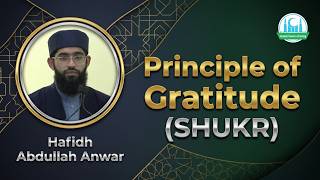 ICI · Irving, TX · Oct 24, 2026Thank Allah in ease and hardship“Even in moments of difficulty, when it feels like there's nothing going your way, there is always something to be grateful for.”
Either we're receiving a blessing, which calls for shukr, or we're going through a hardship, which calls for sabr.13:29Al-Ittehad · Vista, CA · Sep 19, 2026Gratitude and patience carry believers through life
Real gratitude is not a feeling.16:14London Muslim Mosque · London, ON · Sep 11, 2026Gratitude means using blessings well