
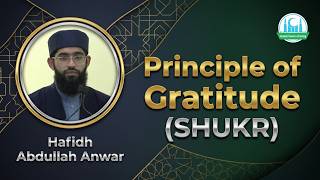
Gratitude guides believers through hardship
“While we work towards a better future, let us not forget the past.”
Gratitude (shukr) is the believer's straight path to Allah in every circumstance, so even today's economic hardship must be met with thankfulness when measured against far greater historical trials and Allah's unseen blessings.
The khutbah in 7 steps
- Khutbah opening: praise of Allah, Quranic commands to fear Him and speak justly, and the hadith that the best guidance is the Book of Allah and the Sunnah while every innovation is misguidance.
- Allah has subjected the heavens and earth for humankind and lavished seen and unseen blessings, so people should know their worth and respond with gratitude rather than see themselves as cosmic accidents.
- Shukr is al-sirat al-mustaqeem; Satan ambushes that very path and boast that most people will be ungrateful, making gratitude the truest obedience.
- Shukr is itself a divine blessing that itself requires shukr, so complete gratitude is only possible through Allah's grace.
- Contemporary inflation and high interest rates are reframed by a tenth-century Egyptian scholar's account of famine under al-Mustansir, when people ate dogs, children, and corpses and wheat disappeared entirely.
- The believer should not be complacent but should pursue improvement while remembering the past and remaining grateful for whatever Allah has decreed.
- Closing supplication for forgiveness, steadfastness, gratitude, and protection from the Fire.
In the khateeb's words
“it wouldn't be an exaggeration to say that Islam is shukr that wouldn't be an exaggeration Islam is gratitude”
“from the blessings he writes upon me is Allah enabling me to make shukr in times of high prices”
“I'm not saying that we should all be complacent and that we shouldn't seek change and betterment but I'm saying that while we work towards a better future let us not forget the past”
For the dinner table
The khutbah reminded us that Allah has given us many blessings, both visible and hidden. Even hardships can contain blessings through forgiveness, reward, and lessons, when a believer responds with patience and trust. Gratitude is part of the straight path, and the believer seeks Allah’s goodness in both ease and difficulty. We should remember how people in earlier times endured severe hardship, while still working responsibly toward a better future. The khutbah encouraged us to thank Allah for what He has given us and ask Him to help us remember, thank, and worship Him well.
- What is one blessing you notice every day, and how can you show gratitude for it?
- How might patience change the way we handle something difficult?
- Why is it possible to hope for improvement while still being thankful now?
More on Gratitude
 ICI · Irving, TX · Oct 24, 2026Thank Allah in ease and hardship“Even in moments of difficulty, when it feels like there's nothing going your way, there is always something to be grateful for.”
Either we're receiving a blessing, which calls for shukr, or we're going through a hardship, which calls for sabr.13:29Al-Ittehad · Vista, CA · Sep 19, 2026Gratitude and patience carry believers through life
Real gratitude is not a feeling.16:14London Muslim Mosque · London, ON · Sep 11, 2026Gratitude means using blessings well