
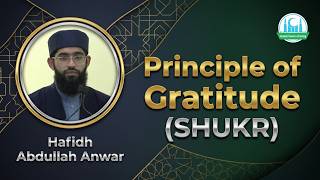
True gratitude turns blessings into service
“A true grateful believer is someone who recognizes the mercy of Allah subhanahu wa ta'ala.”
True gratitude to Allah means remembering Him in ease and hardship, appreciating His blessings in the heart, and using youth, health, wealth, time, and life to earn the Hereafter.
The khutbah in 6 steps
- Gratitude should remain constant in both ease and hardship, not only during crises.
- Shukr has dimensions of the tongue, heart, and actions, including appreciation for faith, health, safety, family, and worship.
- Comparison, especially through social media, can obscure blessings; believers should trust Allah’s wisdom about their circumstances.
- A prophetic reminder urges using youth, health, wealth, free time, and life before they are lost.
- Blessings should become service through Quran, masjid attendance, volunteering, charity, teaching, visiting the sick, and helping others.
- The closing passage from Surat al-A'raf connects righteous deeds, divine guidance, gratitude, and the reward of Jannah.
In the khateeb's words
“A true grateful believer is someone who recognizes the mercy of Allah subhanahu wa ta'ala. No matter what happens. And he's always thankful to Allah subhanahu wa ta'ala.”
“There's things in our daily life. That we're so used to. That we forgot their blessings from Allah subhanahu wa ta'ala.”
“Whatever wealth you have right now. Is the best time for you to have it. Whatever point of your career or your business you're in. This is the best time for you to be in.”
“When you have food. You feed someone. When you have knowledge. You teach someone. When you have time. You visit sick people. And if you have health. You go help other people.”
For the dinner table
The khutbah reminded us to thank Allah during good times as well as difficult ones. Allah’s blessings are too many to count, including faith, health, safety, family, food, and the freedom to worship. Gratitude should appear in our words, live in our hearts, and guide how we use what Allah has given us. Constant comparison, especially on social media, can make us overlook our own blessings. We show real thankfulness by using our youth, health, wealth, free time, and life to worship Allah and help others.
- What is one everyday blessing you usually forget to thank Allah for?
- How could you use some of your free time this week to grow closer to Allah?
- What is one blessing you could share with or use to help another person?
More on Gratitude
 ICI · Irving, TX · Oct 24, 2026Thank Allah in ease and hardship“Even in moments of difficulty, when it feels like there's nothing going your way, there is always something to be grateful for.”
Either we're receiving a blessing, which calls for shukr, or we're going through a hardship, which calls for sabr.13:29Al-Ittehad · Vista, CA · Sep 19, 2026Gratitude and patience carry believers through life
Real gratitude is not a feeling.16:14London Muslim Mosque · London, ON · Sep 11, 2026Gratitude means using blessings well