
Live each day as if it were your last
“It's not about how you start the race but it's about how you end the race.”
Because every servant is resurrected in the state in which they die, believers must live and pray each day as if it were their last in order to be granted a good ending (husn al-khatima).
The khutbah in 8 steps
- Opening: pairs the famous hadith 'actions are by intentions' with the lesser-known 'actions are by their endings'
- The certainty of our last day and the weekly Quranic reminder (3:102) not to die except in submission
- Story of a good ending: Imam Abu Hanifa refuses al-Mansur's chief-judge post, is imprisoned, tortured, poisoned, and dies in sajda
- Story contrasted with Sufyan al-Thawri's flight, his honesty as a farm laborer, and clinging to the Kaaba
- The evil ending: Abu Ja'far al-Mansur falls from his camel and dies on the way to seize Sufyan
- Action item: pray every salah as a farewell prayer, like the Prophet's farewell to Mu'adh ibn Jabal
- Our comforts vs. the trials of Gaza, Burma, and Uyghur Muslims; gratitude and increased dhikr and istighfar
- Closing du'as plus a reminder to vote in the upcoming election without endorsing any candidate
In the khateeb's words
“that every servant of Allah will be resurrected upon that which they die”
“so it's not about how you start the race but it's about how you end the race”
“they would like to make them their puppets because they know that if they control the scholars then they will control the people”
“that he did not even take one single piece of fruit”
For the dinner table
Today the khateeb spoke about a hadith we don't hear often: actions are judged by their endings, because every person will be resurrected in the state in which they died. He shared the story of Imam Abu Hanifa, who refused to become a puppet judge for a tyrant ruler and was poisoned in prison, yet he spent his final moments in sujood, the position where we are closest to Allah. Then he told the opposite story: the tyrant Abu Ja'far al-Mansur, who kept hunting righteous scholars until he fell from his camel and died an evil ending on his way to harm Sufyan al-Thawri. The lesson is that we should live each day, and pray each prayer, as if it could be our last, and keep asking Allah with the du'a 'Ya Muqallibal-Quloob, thabbit qalbi 'ala deenak', O Turner of hearts, keep my heart firm on Your religion. The khateeb also reminded us that our comfort is a blessing we must repay with gratitude, dhikr, and remembering our suffering brothers and sisters around the world.
- If you knew this week was your last week, what is one thing you'd do differently?
- Why do you think the scholar refused to eat even one grape from the garden he worked in?
- What's the 'goodbye at the airport' feeling, and how could it change the way we pray?
The masjids
More on Death & the hereafter

Fit your schedule around your prayer.18:56ICN-BM · Bellevue, TN · Oct 17, 2026Use your limited time before judgment

The currency in the hereafter is your good deeds.15:14IMAAM Center · Silver Spring, MD · Oct 17, 2026Protect your good deeds by righting wrongs
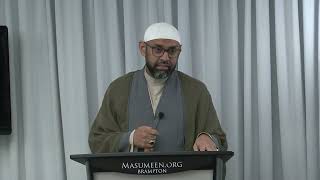
The truth does not give us permission to spread unverified claims.25:09Masumeen · Brampton, ON · Oct 17, 2026Why the afterlife makes justice necessary