
Honor family while protecting others' rights
“Our rights end when the rights of others stop.”
The story of Musa teaches Muslims to combine devotion with wisdom by protecting family and others, respecting legitimate differences, and serving the community humbly.
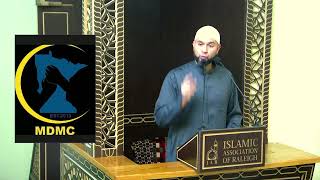
The khutbah in 7 steps
- Uses Muharram and Musa's rescue to emphasize mercy and rejection of harming women and children.
- Explains family obligations toward parents, spouses, and children, warning against destructive in-law interference.
- Advises wisdom, safety, and restraint when praying in public places.
- Discusses acceptable fiqh differences and discourages fighting over interpretive details.
- Uses shoe-placement etiquette to show that religious practice must protect others' rights.
- Presents community roles as Allah-given service rather than status or control.
- Concludes that leaders should communicate, seek help, empower experts, and support Masjid Mas'ab's building effort.
In the khateeb's words
“So for the in-laws, fathers and mothers on this side and on that side, you causing issues in the marriage is equal to that.”
“We have to run our deen and the sensitivity of our deen that our rights end when the rights of others stop.”
“That's why Prophet Muhammad said, "Ameerul Qawmi Khadimuhum" The Ameer is the servant.”
For the dinner table
The khateeb drew practical lessons from the story of Musa about how we treat people and carry responsibility. He reminded us to care for our parents, spouses, and children, and to avoid creating conflict between them. He encouraged us to practice our faith with wisdom and consider how even small actions, like where we leave our shoes, affect others. Serving the community is a blessing from Allah, and feeling afraid is part of being human. Musa’s example also teaches us to ask for help, communicate clearly, and trust people whose skills can strengthen our shared work.
- When you feel scared, what kind of help or reassurance makes a difference?
- What is something another family member does well that you could learn from?
More on Family & marriage
Don't let a moment of disagreement turn into conflict where years of good are forgotten like that.14:45IAR Atwater · Southwest Raleigh, NC · Oct 31, 2026Protect relationships when disagreements arise
 EPIC · Plano, TX · Oct 30, 2026Honor your mother while you still can“Call sometimes just because you want to hear her voice.”

We cannot have disrespectful parents disrespecting each other in the presence of their kids.22:41UMMA · Southfield, MI · Sep 19, 2026Faith shows in how we treat family