
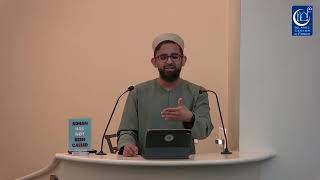
Family & marriageFrom the masjid's own video, Nov 7, 2026.
Honoring parents opens the way to Jannah
“Jannah is by the feet of your mom.”
In one sentence
Honoring and serving both parents is a duty second only to worshipping Allah, among the deeds He loves most, and a major path to Jannah while they are alive.
The khutbah in 4 steps
- Defines birr al-walidayn as caring for and treating parents well, immediately after worship of Allah.
- Uses hadiths to rank prayer on time, honoring parents, and jihad, linking parental care with relief and nearness to Jannah.
- Urges busy adults and young people not to neglect, disobey, anger, or displease their parents.
- Concludes with Jahima’s story, prioritizing service to a living mother over leaving for jihad, and notes continued honor after parents’ deaths.
Try this week
Pray the five daily prayers on time.
Care for both parents with kindness, gratitude, companionship, and service.
Avoid disobeying, angering, or displeasing parents.
If a mother is alive, prioritize staying with and serving her when choosing among good pursuits.
Donate blood if able to help save lives.
Make dua for hospitalized people, deceased community members, and their families.
Donate generously to support the masjid.
Sources the khateeb cited
Sahih al-BukhariAbdullah ibn Mas'ud’s narration ranks prayer on time, honoring parents, and jihad among beloved deeds, in that order.
Sahih MuslimA parallel narration presents prayer on time, birr al-walidayn, and jihad as deeds bringing a person closer to Jannah.
Sunan an-Nasa'iThe story of Jahima is used to prioritize serving a living mother over leaving for jihad.
Quotes
In the khateeb's words
“Life is busy. Everybody has a lot to do. But never forget about parents. Never neglect them. Never disobey them.”
“But if mom is alive, go back. Stay with mom. Stick to mom. Jannah is by the feet of your mom. It's there.”
Talk about it at home
For the dinner table
The khutbah teaches that caring for parents comes immediately after worshipping Allah and is among the deeds Allah loves most. It asks us to make both parents close companions, serve them, and avoid words or actions that disobey, anger, or displease them. The story of Jahima reminds us that when a mother is alive, serving her may take priority over another good ambition. Even after parents die, Islam leaves us ways to continue honoring them.
- What is one way we can make our parents feel like our close companions this week?
- How should we handle it when we disagree with an older family member?
- What is one kind act we can do for a living or deceased relative?
Keep listening
More like this
Don't let a moment of disagreement turn into conflict where years of good are forgotten like that.14:45IAR Atwater · Southwest Raleigh, NC · Oct 31, 2026Protect relationships when disagreements arise
You must be good to your parents.11:53ICSD, East County · El Cajon, CA · Nov 21, 2026Honor your parents for Allah’s pleasure
 ICSD, East County · El Cajon, CA · Nov 14, 2026Wealth is a test, not a status“Allah subhanahu wa ta'ala deals with us the way we deal with one another.”Wealth & charity

To use the ni'ma to obey Allah, not to disobey Allah.29:46MCC San Diego · Rancho Bernardo, CA · Oct 30, 2026Use Allah’s blessings to obey HimGratitude
Before you separate the news, you have to check right.11:24ICSD, East County · El Cajon, CA · Oct 10, 2026Verify news before judging othersCommunity & unity
He spent his time at home in the servitude of his entire family.10:27ICF · Frisco, TX · Nov 21, 2026Your real character begins at home