
Revival can rise from catastrophe
“No matter how sad the reality is, we must put our trust in Allah.”
The Mongol invasion shows that even devastating decline can become a catalyst for the ummah's revival under Allah's promise, so Muslims facing Gaza's tragedy should keep faith, take responsibility, and contribute wherever they can.
The khutbah in 6 steps
- The khutbah recounts the 50-year Mongol invasion, the fall of Baghdad, mass death, and the crisis described by Ibn al-Athir.
- It argues that political fragmentation, corruption, social insecurity, and lost communal strength made the catastrophe possible.
- It traces post-Mongol intellectual, cultural, and political revival, including new scholars and powers such as the Delhi Sultanate and Ottoman Empire.
- It presents Allah's promised protection of Muhammad's ummah alongside the prophetic distinction between external calamity and internal fighting.
- It compares the Mongol invasion, colonization, and the current Gaza famine and invasion as major tragedies, emphasizing present communal weakness.
- It closes with hope for revival emerging from Gaza's suffering while urging listeners to make dua, improve personally, and get involved.
In the khateeb's words
“no matter how negative the situation might appear no matter how sad the reality is we must put our trust in Allah that Allah subhanahu wa ta'ala will bring from the ashes of a catastrophe”
“at the very least be involved do something just be a part of the ummah be concerned make dua do whatever little you can at the very least just get some type of involvement”
For the dinner table
The khutbah begins with the Mongol invasion, one of the darkest disasters in Muslim history, and describes the fall of Baghdad and the loss of millions. It explains that the Muslim world was already divided and weakened, yet new scholars, cultures, and political centers emerged afterward. The speaker connects that pattern to colonization and to the suffering now seen in Gaza, calling it a painful sign of the ummah's weakness. He says Muslims should trust Allah's promise that this ummah will endure, while remembering that hope is not an excuse to sit back. Each of us should make dua, improve our personal lives, and contribute in whatever way we can.
- How can difficult times sometimes lead people or communities to rebuild in better ways?
- What is one small way our family could get involved and help others this week?
- How can we stay hopeful while still taking responsibility for our actions?
More on the ummah & current events
Islam belongs to all of humanity.16:15FIC · Swartz Creek, MI · Oct 10, 2026Dawah must serve all of humanity
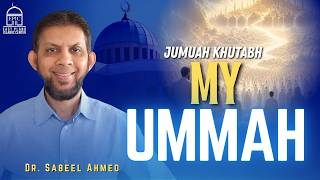 EPIC · Plano, TX · Aug 3, 2026The ummah must serve humanity“We have to engage the greater society and we have to better the greater society.”
 18:19ICRR · Round Rock, TX · Aug 1, 2026Liberation depends on the next generation“The success of a project is not dependent on the physical completion of it, but it's dependent on if the next generation inherits your legacy or not.”