
Gratitude means serving with Allah’s blessings
“You have to use whatever Allah has given you, not only for yourself, but for people around you, for community, for the whole world in general.”
The khutbah teaches that shukr means recognizing Allah’s blessings as responsibilities and expressing gratitude through service, appreciation, and righteous action.
The khutbah in 6 steps
- Connects Thanksgiving’s theme of gratitude with Islam’s concept of shukr and examples of prophetic approval for beneficial practices.
- Defines shukr as acknowledging Allah’s blessings and contrasts it with kufr, or ingratitude.
- Explains that blessings are responsibilities: gratitude brings increase and barakah, while ingratitude can cause blessings to disappear.
- Presents three pillars of gratitude: recognizing blessings, feeling grateful, and expressing thanks through action.
- Applies shukr to wealth, knowledge, authority, service, family relationships, forgiveness, and appreciation of others.
- Concludes with prayers for Gaza, Sudan, and the community, followed by a mosque parking reminder.
In the khateeb's words
“You have to use whatever Allah has given you, not only for yourself, but for people around you, for community, for the whole world in general, as much as you can.”
“He who does not thank people is not thankful to Allah subhanahu wa ta'ala.”
For the dinner table
Today’s khutbah reminded us that shukr, or gratitude, means more than saying thank you. It begins with noticing Allah’s blessings, feeling thankful to Him, and showing that gratitude through our actions. Our money, knowledge, and abilities come with responsibilities, including helping other people. The khateeb also reminded us to thank the people around us and to remember their kindness instead of focusing only on their mistakes. At home, we can build a habit of appreciating everyday efforts and recognizing what someone has done well before discussing what needs to improve.
- What is something you used today that you rarely remember to thank Allah for?
- How could you use something you know or have to help another person this week?
- What did someone in our family do today that you would like to thank them for?
More on Gratitude
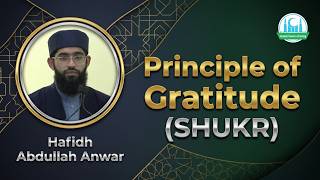 ICI · Irving, TX · Oct 24, 2026Thank Allah in ease and hardship“Even in moments of difficulty, when it feels like there's nothing going your way, there is always something to be grateful for.”
Either we're receiving a blessing, which calls for shukr, or we're going through a hardship, which calls for sabr.13:29Al-Ittehad · Vista, CA · Sep 19, 2026Gratitude and patience carry believers through life
Real gratitude is not a feeling.16:14London Muslim Mosque · London, ON · Sep 11, 2026Gratitude means using blessings well