
Gratitude turns blessings into worship
“Whatever Allah has decreed for us, we're to be grateful and thankful for whatever Allah has given us.”
The khutbah argues that gratitude to Allah is a central act of worship expressed through praise, inner recognition, obedience, contentment, charity, and striving for religious growth rather than worldly comparison.
The khutbah in 6 steps
- Explains gratitude as a required response to Allah’s blessings, expressed through praise, inner love, and obedient action.
- Presents Quranic warnings that gratitude brings increase, while ingratitude can lead to deceptive worldly ease and accountability.
- Uses the valley-of-gold hadith and Surah al-Takathur to warn that accumulation distracts from worship.
- Retells the Prophet’s meal with Abu Bakr, Umar, and an Ansari host to show that ordinary food and drink are blessings for which people answer.
- Teaches listeners to compare downward in worldly possessions but upward in worship, knowledge, and religious practice.
- Applies the message to the blessing of Islam and following the Quran and Sunnah, then closes with supplications for gratitude, family righteousness, Paradise, and safety from Hell.
In the khateeb's words
“Whatever we get, whatever Allah has decreed for us, we're to be grateful and thankful for whatever Allah has given us.”
“O son of Adam, do you have of your wealth except what you ate and it came out?”
“As Muslims in this country, obviously, Islam is our greatest blessing that Allah has bestowed upon us.”
For the dinner table
Today’s khutbah teaches that gratitude to Allah is more than saying thank you. We show it with our words, our hearts, and the way we obey Allah with our actions. The speaker warns us not to let wealth, possessions, or comparison distract us from worship, and reminds us that every blessing will be accounted for. We should be content with worldly blessings while striving to grow in knowledge and worship. Above all, we should recognize Islam as one of Allah’s greatest gifts and ask Him to make us grateful.
- What is one blessing you noticed today that you usually overlook?
- When can comparing yourself with others make gratitude harder?
- What is one way you can grow in worship or knowledge this week?
More on Gratitude
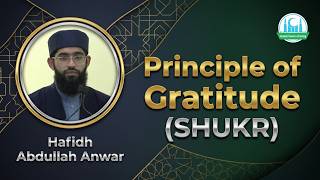 ICI · Irving, TX · Oct 24, 2026Thank Allah in ease and hardship“Even in moments of difficulty, when it feels like there's nothing going your way, there is always something to be grateful for.”
Either we're receiving a blessing, which calls for shukr, or we're going through a hardship, which calls for sabr.13:29Al-Ittehad · Vista, CA · Sep 19, 2026Gratitude and patience carry believers through life
Real gratitude is not a feeling.16:14London Muslim Mosque · London, ON · Sep 11, 2026Gratitude means using blessings well