
Gratitude means acting on Allah’s blessings
“You owe Him love, respect and gratefulness.”
Because human beings are naturally ungrateful, reflecting on Surah al-Adiyat and the Day of Resurrection should move Muslims to recognize Allah’s blessings and demonstrate gratitude through concrete action.
The khutbah in 6 steps
- Calls listeners to move from reciting the Qur’an to understanding and living its message.
- Explains Surah al-Adiyat’s oaths through vivid imagery of warhorses.
- Identifies human ingratitude and love of wealth as spiritual problems.
- Presents resurrection and the exposure of hidden deeds as motivation for gratitude.
- Connects gratitude to recognizing daily blessings and acting rather than merely speaking.
- Urges support for the mosque, cataract treatment, and displaced people from Sudan.
In the khateeb's words
“The biggest gift that we have, my brothers and sisters, is we are Muslims.”
“Talk is cheap as they say, right? But acting. And Allah subhanahu wa ta'ala wants us to give like He gave us.”
“Allah gave you the ability to see. And He doesn't owe you anything. You owe Him love, respect and gratefulness.”
“It is the ability to stop and think about the na'am of Allah that will make us grateful for them.”
For the dinner table
Today's khutbah was about Surah Al-Adiyat, a short surah many of us already know by heart. Allah starts it by describing horses racing into battle, panting, striking sparks and stirring up dust. These horses stay loyal and give everything for their owners, even though they only get a little hay or a few carrots. Then Allah tells us something honest about ourselves: people are often ungrateful and always want more, instead of noticing all the good they already have. The khateeb told us that Umar ibn al-Khattab used to ask Allah to make him one of the 'few' who are truly grateful. He reminded us that gratitude means action and not just words, like taking care of our masjid and helping people in need, such as those who could see again after a $250 cataract surgery or families forced from their homes in Sudan. So tonight, let's think about one blessing we usually forget, and one way to say thank you to Allah by doing something good.
- What is one blessing you had today that you didn't even notice until now?
- If a horse can be so loyal to someone who only gives it some carrots, how can we show Allah we're thankful for everything He gives us?
- What is one thing you could do this week to show gratitude through what you do, not just what you say?
More on Gratitude
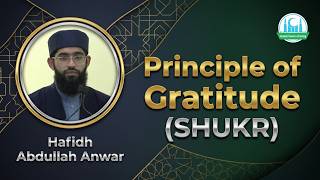 ICI · Irving, TX · Oct 24, 2026Thank Allah in ease and hardship“Even in moments of difficulty, when it feels like there's nothing going your way, there is always something to be grateful for.”
Either we're receiving a blessing, which calls for shukr, or we're going through a hardship, which calls for sabr.13:29Al-Ittehad · Vista, CA · Sep 19, 2026Gratitude and patience carry believers through life
Real gratitude is not a feeling.16:14London Muslim Mosque · London, ON · Sep 11, 2026Gratitude means using blessings well