
Respond to Allah's gifts with gratitude
“Would you rather have a hundred camels or would you rather live in the same place and have the company of the Messenger of Allah?”
The khutbah argues that believers should respond to Allah's gifts with honest self-reflection, gratitude, patience, repentance, and hope rather than envy or dissatisfaction with worldly differences.
The khutbah in 6 steps
- Opens with taqwa and frames Surah At-Tawbah as a stern call to self-examination.
- Explains the Qur'anic account of people resenting the Prophet's distribution of zakah and gifts of camels.
- Uses the Ansar's reaction to expose envy, silent dissatisfaction, and misplaced worldly priorities.
- Contrasts worldly possessions with the lasting value of faith, companionship with the Prophet, and the Hereafter.
- Encourages hope through repentance, al-Hawd, Allah's generosity, and preparation for Ramadan.
- Calls the community to gratitude, increased worship, mutual support, patience, and unity.
In the khateeb's words
“But more importantly, you will read the book and then look at yourself. And you will know that you are absent.”
“What would you rather have? Would you rather have a hundred camels or would you rather live in the same place and have the company of the Messenger of Allah?”
“Don't look at others, even in this dunya. I can never be envious, insha'Allah, bi'idhnillah, I can never be envious of another person, Muslim or not, and most assuredly never ever covetous or jealous of a non-Muslim.”
For the dinner table
This khutbah reminds us that the Qur'an should make us look honestly at our own hearts, not only notice other people's faults. The speaker uses the Ansar's reaction to gifts of camels to warn us about envy and dissatisfaction with what Allah gives others. We are encouraged to choose patience, gratitude, repentance, and hope in Allah over despair and comparison. As Ramadan approaches, we should increase worship, ask forgiveness, and help one another with patience and prayer. Our goal is to live as grateful servants of Allah and hope to meet Him and drink from the Prophet's Hawd.
- What blessing did you notice today that you usually overlook?
- When do you find yourself comparing what you have with what someone else has?
- How can our family help one another stay patient and connected to Allah?
More on Gratitude
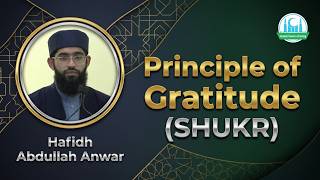 ICI · Irving, TX · Oct 24, 2026Thank Allah in ease and hardship“Even in moments of difficulty, when it feels like there's nothing going your way, there is always something to be grateful for.”
Either we're receiving a blessing, which calls for shukr, or we're going through a hardship, which calls for sabr.13:29Al-Ittehad · Vista, CA · Sep 19, 2026Gratitude and patience carry believers through life
Real gratitude is not a feeling.16:14London Muslim Mosque · London, ON · Sep 11, 2026Gratitude means using blessings well