
Parents can turn love into a lifelong legacy
“You're creating this intergenerational legacy, the legacy of love and affection, the legacy of how to love and how to be loved.”
Because children's time with parents continually shrinks, Muslim parents should intentionally build a home of consistent love, affection, humility, and prayer so that closeness becomes a lifelong intergenerational legacy.
The khutbah in 6 steps
- Argues that shrinking parent-child contact makes quality time an urgent family priority.
- Uses al-Aqra's hadith in Sahih al-Bukhari to show that affection is prophetic sunnah.
- Frames affection as an intergenerational legacy teaching children how to love and be loved.
- Explains “lower your wing” from Surah al-Shu'ara as humility and tenderness in the household.
- Applies Abu Huraira's narration about al-Hasan to terms of endearment, joyful greetings, consistent affection, and dua.
- Closes by urging parents to schedule loving family time, begin even after past neglect, and remain emotionally available as children mature.
In the khateeb's words
“That time, which is decreasing, as the days, months, and years pass, you must maximize that for these aims.”
“What you're doing is you're teaching your child. You're creating this intergenerational legacy, the legacy of love and affection, the legacy of how to love and how to be loved.”
“That love and affection is a part of our faith. Right? To love and to be loved.”
“Call them by good names. And let them call you by good names.”
For the dinner table
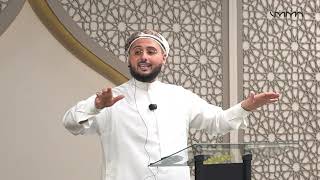
Sheikh Aamir reminded us that as children grow and schedules get busier, we need to make the most of our time together. Talking, joking, playing, and showing affection are ways to build a loving home and follow the Prophet's example. These small acts also teach children how to give and receive love, something they can pass on to future generations. He encouraged us to greet our loved ones happily, use kind names, and ask Allah to love them and those who love them. As children grow older, they may especially want someone to sit with, talk to, and trust with their feelings. Whatever our family habits have been, we can begin showing more love today.
- What is one thing we do together that helps you feel loved?
- When you have had a difficult day, how would you like us to welcome you home?
- Who would you like to include in a du'a asking Allah to love them tonight?
More on Family & marriage

Don't let a moment of disagreement turn into conflict where years of good are forgotten like that.14:45IAR Atwater · Southwest Raleigh, NC · Oct 31, 2026Protect relationships when disagreements arise
 EPIC · Plano, TX · Oct 30, 2026Honor your mother while you still can“Call sometimes just because you want to hear her voice.”
We cannot have disrespectful parents disrespecting each other in the presence of their kids.22:41UMMA · Southfield, MI · Sep 19, 2026Faith shows in how we treat family