
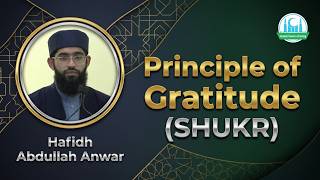
Gratitude is worship in action
“Being grateful to your Lord is not the small or the tiny concept that we think.”
True gratitude to Allah is a lived form of worship expressed through humility, praise, useful action, and generous recognition of the people through whom blessings reach us.
The khutbah in 6 steps
- Introduces gratitude as an Islamic path of salvation, contrasting gratitude with denying blessings.
- Uses Ashura and the Prophet’s night prayer to show gratitude as practiced worship.
- Explains that gratitude extends beyond saying alhamdulillah to speech, action, learning, and useful deeds.
- Applies gratitude to parents, spouses, children, and family through appreciation, help, gifts, and positive attention.
- Extends gratitude to neighbors, community members, and even enemies through the example of al-Mut'im ibn Adi.
- Concludes with humility before Allah and prayers for Muslims facing hardship.
In the khateeb's words
“Being grateful to your Lord is not the small or the tiny concept that we think. It's not just to say alhamdulillah after eating or when you receive a blessing from Allah subhanahu wa ta'ala.”
“Always when we do anything, when we have any blessing, we should ask Allah or praise Allah subhanahu wa ta'ala for these blessings.”
“So you have to be grateful. You have to try to pay them back when they get weak, get old, when they are in need for your help and support.”
“Even, you know, the prophet taught us not to be just grateful to our families, to our neighbors, to our community, but even to our enemies.”
For the dinner table
The khutbah teaches that gratitude is much more than saying alhamdulillah when something good happens. It means recognizing Allah’s blessings, praising Him in our words and worship, and letting gratitude shape our actions. We should also thank the people who care for us, parents, spouses, children, neighbors, and community members, by noticing their good, speaking kindly, helping, and supporting them when they grow older or need us. The speaker even points to gratitude toward an enemy who once protected the Prophet, showing that a good deed deserves recognition wherever it comes from. The sermon closes by reminding us that every moment of life depends on Allah’s blessings and by praying for people suffering across the Muslim world.
- What is one blessing you often overlook, and how could you thank Allah for it this week?
- Who in our family deserves a specific word of thanks today, and what did they do?
- How can we notice the positive in someone’s efforts instead of focusing only on one mistake?
More on Gratitude
 ICI · Irving, TX · Oct 24, 2026Thank Allah in ease and hardship“Even in moments of difficulty, when it feels like there's nothing going your way, there is always something to be grateful for.”
Either we're receiving a blessing, which calls for shukr, or we're going through a hardship, which calls for sabr.13:29Al-Ittehad · Vista, CA · Sep 19, 2026Gratitude and patience carry believers through life
Real gratitude is not a feeling.16:14London Muslim Mosque · London, ON · Sep 11, 2026Gratitude means using blessings well