
Allah's warnings are mercy before Judgment
“There's a purpose behind our existence.”
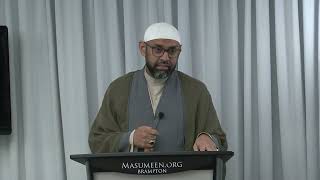
The khutbah argues that Allah's warning about the terrifying Day of Judgment is itself an expression of His mercy, calling all people to taqwa, gratitude, faith, and a conscious relationship with Him so they may be saved.
The khutbah in 6 steps
- Opens with the beginning of Surah Al-Hajj and its universal call to taqwa and relationship with Allah.
- Explains the terrifying Day of Judgment through nursing mothers, pregnant women, and people appearing intoxicated.
- Uses a stage-fright example to explain dhuhul, being mentally overwhelmed into forgetting.
- Analyzes Arabic grammatical emphasis to intensify the image of maternal love overwhelmed by the Hour.
- Resolves the apparent tension by presenting divine warnings as merciful calls to faith and gratitude.
- Closes with exhortations, blessings upon the Prophet, and supplications for forgiveness, healing, and steadfastness.
In the khateeb's words
“there's a purpose behind our existence why we exist in this world is for us to have that connection with our Creator subhanahu wa ta'ala”
“he became overcome by stage fright something else overcame his mind to the point that he forgot”
For the dinner table
The khutbah explains that Allah addresses all humanity with a call to taqwa, meaning an aware relationship with our Creator. It describes how overwhelming the Day of Judgment will be, even to the point that a nursing mother forgets the child she loves. The imam says these warnings are not opposed to Allah's mercy; they are warnings because Allah wants people to be saved. We should respond with faith, gratitude for known and unknown blessings, mindfulness of Allah, blessings upon the Prophet, and a request to remain on the straight path.
- What helps you remember Allah when you feel overwhelmed or distracted?
- What blessing are you especially grateful for today?
- How can a warning be an act of love?
More on Death & the hereafter

Fit your schedule around your prayer.18:56ICN-BM · Bellevue, TN · Oct 17, 2026Use your limited time before judgment

The currency in the hereafter is your good deeds.15:14IMAAM Center · Silver Spring, MD · Oct 17, 2026Protect your good deeds by righting wrongs
The truth does not give us permission to spread unverified claims.25:09Masumeen · Brampton, ON · Oct 17, 2026Why the afterlife makes justice necessary