
Gratitude means thankfulness and patience
“If something good happens to him, he's grateful and it's good for him, and if something harmful befalls him, he's patient and it is indeed good for him as well.”
True gratitude to Allah means remembering His blessings and responding with thankfulness in ease and patience in hardship.
The khutbah in 6 steps
- Introduces shukr as a reminder from Surah Ibrahim during severe trials.
- Uses Musa and Bani Israel to show gratitude can be commanded amid oppression.
- Explains how patience and gratitude work together through a hadith narrated by Suhayb.
- Uses Surah al-Adiyat to describe canood: counting calamities while forgetting blessings.
- Contrasts ingratitude with the Prophet’s grateful night prayer.
- Warns that blessings and hidden intentions will be examined on Judgment Day.
In the khateeb's words
“Musa alayhi salam reminded them of shukr gratitude and Allah subhanahu wa ta'ala confirmed this in the next set of verses in the same surah”
“if something good happens to him he's grateful and it's good for him and if something harmful befalls him he's patient and it is indeed good for him as well”
For the dinner table
The khutbah teaches that shukr, or gratitude, is central to a believer’s life. Musa reminded a suffering people to remember Allah’s favors, showing that gratitude does not require a life without hardship. The Prophet taught that believers respond to good with gratitude and difficulty with patience, and both responses can benefit them. We should notice the blessings we often overlook, use them in ways that please Allah, and remember that we will answer for them. Gratitude helps us live with clearer hearts in both ease and difficulty.
- What is one blessing you usually notice only after it is missing?
- How can patience and gratitude work together when something difficult happens?
- What is one blessing our family could use this week in a way that pleases Allah?
More on Gratitude
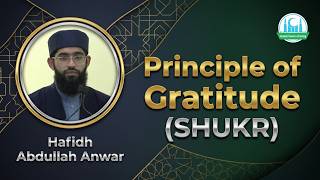 ICI · Irving, TX · Oct 24, 2026Thank Allah in ease and hardship“Even in moments of difficulty, when it feels like there's nothing going your way, there is always something to be grateful for.”
Either we're receiving a blessing, which calls for shukr, or we're going through a hardship, which calls for sabr.13:29Al-Ittehad · Vista, CA · Sep 19, 2026Gratitude and patience carry believers through life
Real gratitude is not a feeling.16:14London Muslim Mosque · London, ON · Sep 11, 2026Gratitude means using blessings well