
Keep good deeds going after sacred months
“I am running from the Qadr to the Qadr of Allah.”
Muslims must carry the spiritual momentum of the sacred months into the rest of the year by finishing the good journeys they start, rejecting superstition, and keeping intentions pure by attributing all success to Allah rather than themselves.
The khutbah in 5 steps
- Opening: keep the habits built during the sacred months/summer instead of losing them when regular schedules resume
- The Quraysh's superstition about Safar and their practice of an-Nasi' (moving Muharram's sanctity to Safar) as conforming religion to desires
- First trap: cutting a journey short because desires are beautified before us; the cure is consistency even in small deeds
- Third trap: continuing deeds with corrupted intentions; the concept of Sifr (zero), credit belongs to Allah, warned by the hadith of the scholar, shaheed, and generous person
- Action item: revisit abandoned journeys, write down ten, pick one, and restart it for life; close with duas and salah
In the khateeb's words
“the most beloved deed to Allah subhanahu wa ta'ala is that done with consistency, even if it's a little.”
“and run from the leper the way you would run from a lion.”
“Sifr, zero, zilch was from me.”
For the dinner table
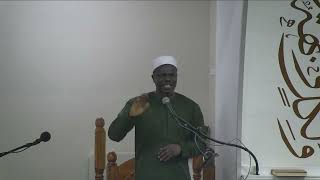
Imam Saif reminded us that the good habits we built during the sacred months shouldn't disappear when life gets busy again. He warned us about three common traps: giving up on a good deed too quickly, stopping once we feel we've 'done enough,' and forgetting that every good thing really comes from Allah. He also taught us that superstitions, like blaming the month of Safar or knocking on wood, have no place in Islam, while still encouraging us to use our minds to stay safe and healthy. The khutbah ended with a simple but powerful invitation: look back at one good intention or habit we've let go of, pick the most important one, and start it again with the goal of keeping it for life.
- What's one good habit you started this year that you don't want to lose?
- Why do some people blame bad luck on things like black cats or a certain month, and what does Islam say about that?
- If you do something really well, who should get the credit, and how can we remember that?
More on the Islamic calendar
 7:52Dar Alnoor · Manassas, VA · Jul 11, 2026Use summer to grow closer to Allah“This opportunity can make me a great Muslim, a great human being, or it can make me a very bad person, depending on how we use the summer.”
Never miss a salah during this free time.16:04Muslim Neighbour Nexus · Mississauga, ON · Jul 25, 2026Use summer time for what matters
 EPIC · Plano, TX · Jul 3, 2026Honor Muharram through fasting and justice“We cannot even enter into Jannah if I have violated someone else's rights.”