
Put Allah’s guidance before personal opinion
“Before you talk about the right of the human being, you talk about the right of Allah and His Messenger first.”
True faith requires submitting personal judgments and disputes to Allah and the Prophet’s guidance, then embodying that guidance as a distinctive alternative for society.
The khutbah in 6 steps
- Establishes submission to Allah and the Prophet as the foundation of Muslim identity.
- Places divine and prophetic guidance before human rights and personal opinions.
- Uses the companions’ humility and respect toward the Prophet to illustrate committed faith.
- Retells Qais bin Shammas’s fear to show how seriously the companions lived Quranic guidance.
- Calls Muslims to offer society a meaningful alternative, illustrated through a preventive-medicine story.
- Concludes with supplication and the call to prayer.
In the khateeb's words
“Before you talk about the right of the human being, you talk about the right of Allah and his messenger first.”
“There is no future without this road map. That is the way.”
“Do we have an alternative? If it's not, may Allah help us to find that alternative.”
For the dinner table
The khutbah teaches that faith begins with trusting Allah and following the Prophet’s guidance. When family or community disagreements arise, we should look to the Quran and Sunnah instead of treating our own opinions as final. The companions showed this humility by carefully listening to the Prophet and lowering their voices. The speaker also challenged Muslims to offer society a healthier alternative, like preventing problems instead of only treating them afterward. We can carry this home by studying Islam, practicing respectful speech, and bringing revelation into everyday choices.
- When has seeking guidance changed the way you handled a disagreement?
- What might a positive Islamic alternative look like in our school, home, or community?
More like this
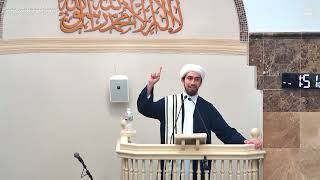
No matter how many steps in your life you took away from Allah, it only ever takes one step to come back.17:46Collins Musallah · Richardson, TX · Oct 30, 2026Allah's guidance protects every part of life
 ICSD · Clairemont, CA · Nov 14, 2026A Muslim life needs a caring community“What we are missing now as Muslims is the rahmah.”Community & unity
 ICSD · Clairemont, CA · Nov 7, 2026Use wealth for goodness, not pride“Use whatever Allah has given you in this dunya to seek your place in the afterlife without forgetting your share of this world.”Wealth & charity
We're not just searching for productivity and efficiency, but more importantly, we're searching for barakah.6:58MCF · Folsom, CA · Oct 24, 2026True productivity comes from seeking barakah
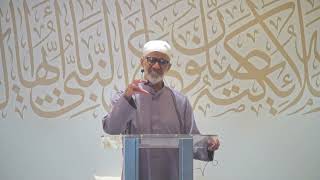
You cannot be a winner by yourself.40:16Rahma Center · Lake Forest, CA · Sep 18, 2026Salvation needs faith, good deeds, and communityCommunity & unity
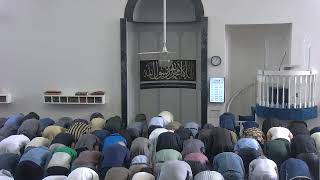 ICSD · Clairemont, CA · Oct 24, 2026Voting is a moral responsibility“A single vote combined with a mobilized community becomes a powerful collective voice that policymakers must heed.”Civic engagement