
Honor Rajab through Sunnah worship
“Our focus should be to just perform more beneficial acts of worship.”
Muslims should honor Rajab and December 25 as a sacred day through Sunnah-based worship, avoiding innovations and sin while preparing for Ramadan.
The khutbah in 6 steps
- Introduces Rajab and argues Muslims should recognize December 25 as a sacred day within it.
- Explains the four sacred months through the Quran and Sunnah.
- Challenges listeners to fast, attend the masjid, pray, and share iftar on December 25.
- Warns against invented Rajab-specific rituals and emphasizes ordinary approved worship.
- Calls for increased worship, charity, forgiveness, and restraint from harming others.
- Connects Rajab practices to preparation for Ramadan and lasting taqwa.
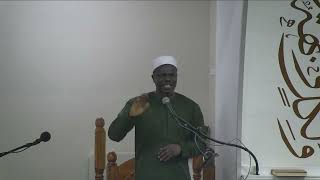
In the khateeb's words
“As Muslims, we should not judge dates on the calendar based on what non-Muslims may do on those days.”
“Rather our focus should be to just perform more beneficial acts of worship. Approved by Allah and His messenger. Sallallahu alayhi wa sallam. During this sacred month.”
“Insha'Allah, working hard now to stay away from wronging ourselves through sin and increasing our good deeds will strengthen us to continue such acts into the month of Shaban and on into the month of Ramadan.”
“We should instead try to focus on keeping our hearts clean from sin, from evil, from filth, from lewdness, from shamelessness, from vulgarity, from profanity, from backbiting, from fighting and attacking others.”
For the dinner table
Today’s khutbah reminded us that Rajab is one of Islam’s four sacred months and a time to prepare for Sha'ban and Ramadan. The speaker urged us to honor it through Sunnah-based worship, more prayer at the masjid, fasting, charity, forgiveness, and cleaner interactions, rather than inventing special rituals without authentic evidence. He especially challenged the community to fast, pray, and share iftar at the masjid on December 25, seeing the day as belonging to Allah rather than surrendering it to another community’s calendar. We were also reminded not to wrong ourselves or others, even in traffic, at work, with family, or when dealing with service workers. The goal is to build taqwa and carry these better habits into Ramadan and beyond.
- How can we show patience when someone frustrates us?
- Why did the speaker warn us against inventing special religious practices?
More on the Islamic calendar
 7:52Dar Alnoor · Manassas, VA · Jul 11, 2026Use summer to grow closer to Allah“This opportunity can make me a great Muslim, a great human being, or it can make me a very bad person, depending on how we use the summer.”
Never miss a salah during this free time.16:04Muslim Neighbour Nexus · Mississauga, ON · Jul 25, 2026Use summer time for what matters
 EPIC · Plano, TX · Jul 3, 2026Honor Muharram through fasting and justice“We cannot even enter into Jannah if I have violated someone else's rights.”