
Praise Allah for who He is
“You're praising Him for who He is.”
True hamd is non-transactional praise of Allah for who He is, cultivating recognition of His immeasurable blessings through continual remembrance.
The khutbah in 5 steps
- Opens with taqwa and introduces Imam Ali’s first Nahj al-Balagha sermon as theological education about Allah’s attributes.
- Distinguishes madh, shukr, and hamd, emphasizing that hamd praises Allah for who He is rather than only for His gifts.
- Explains hamd as comprehensive remembrance and cites a practice of saying Alhamdulillah four times morning and evening.
- Returns to Nahj al-Balagha’s claim that Allah’s praise and blessings cannot be fully expressed or counted.
- Illustrates immeasurable blessings through the liver’s functions and cells, then defers the broader purpose of gratitude to the next khutbah.
In the khateeb's words
“But hamd is about praising, not about what Allah does necessarily, but about you're praising Him for who He is. Irrespective of whether He gives you anything.”
“It forces you to move away from this transactional relationship with Allah Azzawajan.”
“Your liver is essentially a factory. Your liver does things that you are unaware of. It is a full-time, 24-7 factory.”
For the dinner table
The khutbah explains that hamd, or praise, is more than thanking Allah for a particular gift. It means praising Allah for who He is, even when He withholds something, because He remains wise and just. Imam Ali’s words in Nahj al-Balagha show that no person can fully praise Allah or count His blessings. A narration from Imam al-Sadiq teaches a simple practice: say Alhamdulillah Rabb al-'Alamin four times in the morning and four times at night. The speaker invites us to notice ordinary blessings, such as the hidden work of the liver, and let that awareness deepen our remembrance.
- What is one blessing in your body that you usually forget to notice?
- How is praising Allah different from simply saying thank you for receiving something?
- When might praising Allah help us during a difficult day?
More on Gratitude
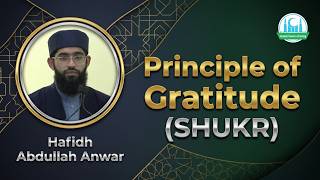 ICI · Irving, TX · Oct 24, 2026Thank Allah in ease and hardship“Even in moments of difficulty, when it feels like there's nothing going your way, there is always something to be grateful for.”
Either we're receiving a blessing, which calls for shukr, or we're going through a hardship, which calls for sabr.13:29Al-Ittehad · Vista, CA · Sep 19, 2026Gratitude and patience carry believers through life
Real gratitude is not a feeling.16:14London Muslim Mosque · London, ON · Sep 11, 2026Gratitude means using blessings well