
The Hijrah calendar calls for honest commitment
“We're going to make extra du'a.”
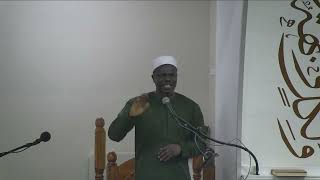
The Hijrah calendar should remind Muslims that faith is measured by collective commitment, willingness to sacrifice, honest self-reflection, and returning to Allah when they fall short.
The khutbah in 5 steps
- Opens with suffering in Gaza, Sudan, and Ethiopia, asking why communal responses seem inadequate.
- Explains Hijrah as the calendar’s starting point, emphasizing leaving things behind, intention, and trusting Allah.
- Contrasts Hijrah’s time of weakness with Surah al-Tawbah and the Tabuk expedition in a stronger, more comfortable community.
- Describes three groups: obedient companions, hypocrites performing faith, and sincere but weak believers who admitted their shortcomings.
- Applies the framework to contemporary Muslim communal life, urging self-reflection, forgiveness, extra dua, and saying yes to worthy requests.
In the khateeb's words
“Let's be honest. sometimes we're in that group of weak Muslims.”
“That's just one measure that I can help myself as I evaluate myself in these three groups.”
“And so this new year, this new history calendar that's coming, it's a reset. We're not going to pop bottles and dance and sing until the night. We're going to make extra du'a.”
For the dinner table
The khutbah explains that the Hijrah calendar is not mainly a party or celebration; it is a yearly reminder of a community that moved, sacrificed, and trusted Allah. The speaker connects this lesson to Surah al-Tawbah and the people who responded differently when the community was asked to leave comfort and face difficulty. Some obeyed readily, some performed faith dishonestly, and some were sincere but admitted weakness and remained open to repentance. We should look honestly at our own choices, say yes when trustworthy committed people ask us to serve, and seek Allah’s forgiveness when we fall short. The new year can therefore become a reset for extra dua, reflection, and stronger communal commitment.
- What is one way our family could make the Hijrah new year a meaningful reset?
- When is it hard to say yes to a good request, and what might help us respond better?
- What does honest self-reflection look like after we make a mistake?
More on the Islamic calendar
 7:52Dar Alnoor · Manassas, VA · Jul 11, 2026Use summer to grow closer to Allah“This opportunity can make me a great Muslim, a great human being, or it can make me a very bad person, depending on how we use the summer.”
Never miss a salah during this free time.16:04Muslim Neighbour Nexus · Mississauga, ON · Jul 25, 2026Use summer time for what matters
 EPIC · Plano, TX · Jul 3, 2026Honor Muharram through fasting and justice“We cannot even enter into Jannah if I have violated someone else's rights.”