
The Prophet chose mercy over revenge
“I do hope from Allah that there will be persons from among their progeny, children, who would worship Allah and serve His cause.”
Muslims should follow the Prophet’s example of mercy by refusing revenge, trusting Allah with their affairs, and responding to humiliation with patience and hope.
The khutbah in 5 steps
- Recounts the Prophet’s prayer after being mocked, injured, and rejected at Ta’if.
- Describes the mountain angel’s offer of punishment and the Prophet’s refusal to seek revenge.
- Connects the Prophet’s mercy to Ibrahim’s trust in Allah when facing the fire.
- Shares a workplace example of responding calmly to hostile messages.
- Closes with supplications, Quranic recitations, and instructions about straight prayer rows.
In the khateeb's words
“Even if these people do not accept Islam, I do hope from Allah that there will be persons from among their progeny, children, who would worship Allah and serve His cause.”
“So he was given the ability, by the will of Allah, to destroy these people who had ridiculed him. Who among us doesn't feel angry when we are embarrassed or humiliated by somebody?”
“And by the grace of Allah, I never replied in anger. I always replied, you know, you're very knowledgeable, and I have learned a lot from you, and I hope to continue to work with you in the future.”
For the dinner table
The khutbah focused on the Prophet Muhammad’s mercy after he was mocked, injured, and offered a chance to punish his attackers. He chose not revenge and hoped that goodness would come through their descendants. We were encouraged to imitate that patience by not answering insults in anger, trusting Allah with our affairs, and responding with dignity. The speaker connected this lesson to Ibrahim’s reliance on Allah and to a personal workplace experience. The closing reminded the congregation to pray attentively and keep the rows straight.
- When have you wanted revenge, and what would a patient response look like?
- What does it mean to trust Allah while still handling a difficult situation responsibly?
- Why do straight prayer rows matter for how we treat one another?
More on the Prophets & seerah
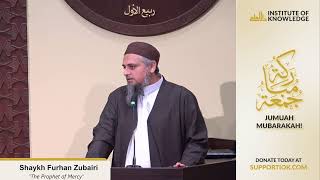 IOK · Diamond Bar, CA · Sep 19, 2026Learn the Prophet's life to love him“Love is something that grows through knowledge.”
Be mindful of Allah, and He will protect you.9:56Al-Sabereen · Harrisburg, PA · Oct 24, 2026Defend the Prophet by living his example
No one can walk for you.5:06MCC San Diego · Rancho Bernardo, CA · Oct 3, 2026Prophetic mercy meets people where they are