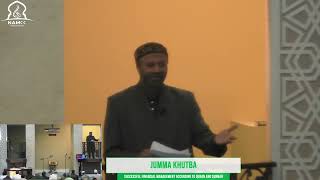
Wealth & charityFrom the masjid's own video, Sep 3, 2025.
Leave interest and trust Allah’s provision
“Make an intention today to be doing our salats on time.”
In one sentence
The khutbah urges Muslims to establish timely prayer and leave interest-based debt, trusting Allah’s provision even if that requires simpler living.
The khutbah in 5 steps
- Calls listeners to pray on time, attend the masjid, and leave interest.
- Explains interest as a major sin prohibited by the Qur’an, including attempts to rename it.
- Describes punishment for consuming interest through Qur’anic warnings and a Mi'raj hadith.
- Urges those involved with interest to exit it, simplify their lifestyles, and trust Allah’s provision.
- Closes with Arabic supplications, Qur’anic recitations, and a reminder to establish prayer.
Try this week
Pray the five daily prayers on time.
Attend the masjid for as many prayers as possible.
If involved with interest, make a plan to leave it, including selling financed possessions if necessary.
Choose rented housing or a regular older car instead of interest-based debt.
Read the book The Major Sins.
Quotes
In the khateeb's words
“to make an intention today to be doing our salats on time. to do as many as we can in the masjid and to get out of interest.”
“and then he's teaching his children that it's okay. By example, he's teaching his children that it's okay.”
Talk about it at home
For the dinner table
The khutbah reminds us to pray on time and attend the masjid whenever we can. It strongly warns against interest and encourages anyone involved with it to work toward leaving it. The speaker says we can live more simply, such as renting or driving an older car, while trusting Allah to provide for us. Our financial choices also teach our children what we believe is acceptable.
- What is one change that could help us pray on time?
- What does trusting Allah’s provision look like when choosing what to buy?
- What values do children learn from the way adults handle money?
Keep listening
More on Wealth & charity
 15:41NAMCC · North Austin, TX · Oct 24, 2026Earn halal, spend wisely, and save“May Allah have mercy on a man who earns his money in a halal way, spends it economically, and saves some of it for a day that he needs it.”

Don't think that taking the easy way out or the shortcut is actually going to make you gain the rizq quicker.25:16MAPS Redmond · Redmond, WA · Sep 18, 2026Trust Allah's provision and find contentment

Everyone wants more Rizq, but no one wants accountability and responsibility, and you cannot have one without the other.19:34Qalam · Carrollton, TX · Sep 11, 2026More provision means more accountability