
Know the Prophet to follow his Sunnah
“In order to be able to follow the Prophet, you need to know him first.”
Muslims honor the Prophet Muhammad by believing everything he brought, obeying him, worshiping Allah through his guidance, loving him above all else, and learning and sharing his Sunnah.
The khutbah in 6 steps
- Rabi al-Awwal is presented as a month connected to major events in the Prophet’s life.
- The khutbah identifies four rights: belief, obedience, worship through his guidance, and love above oneself and family.
- The Sunnah is explained as essential for practical worship, especially prayer and Hajj.
- Listeners are urged to study the Prophet’s seerah, hadith, and guidance in order to follow him knowingly.
- The Prophet’s role in bringing peace and guidance is recalled, along with hope for his intercession and companionship.
- Families are encouraged to share the message after Jumu'ah and make it a weekly habit.
In the khateeb's words
“you cannot find in the Qur'an how to pray your salat and how many records for Salat al-Maghrib for Salat al-Isha and so forth”
“if you try to deliver this message to your family after Salatul Jum'a when you make it home this is great”
For the dinner table
Rabi al-Awwal is presented as a month connected to major events in the Prophet Muhammad’s life. The khutbah says Muslims honor him through four rights: believing what he brought, obeying him, worshiping Allah through his guidance, and loving him above ourselves and our families. To live those rights, we should learn his seerah and hadith, send salutations, and imitate his example. The speaker encourages families to share this message after Jumu'ah and turn it into a weekly habit. Love for the Prophet is also connected to hope for his intercession and companionship.
- Which of the Prophet’s four rights can we practice more intentionally this week?
- What can we learn about the Prophet together as a family?
- How could we share one lesson about the Prophet after Jumu'ah?
More on the Prophets & seerah
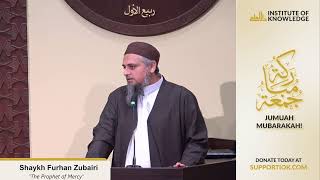 IOK · Diamond Bar, CA · Sep 19, 2026Learn the Prophet's life to love him“Love is something that grows through knowledge.”

Be mindful of Allah, and He will protect you.9:56Al-Sabereen · Harrisburg, PA · Oct 24, 2026Defend the Prophet by living his example
No one can walk for you.5:06MCC San Diego · Rancho Bernardo, CA · Oct 3, 2026Prophetic mercy meets people where they are