
The Prophets & seerahFrom the masjid's own video, Aug 22, 2026.
Honor the Prophet through daily conduct
“Muhammad can refer to the one who praises, and Muhammad can also refer to the one who is praised.”
The khutbah in 6 steps
- Explains that Islamic names carry moral and spiritual significance.
- Uses hadith examples to recommend positive names and names expressing servitude to Allah.
- Demonstrates that praise, criticism, adhkar, and Quranic recitation can affect people and their surroundings.
- Connects the name Muhammad to praise and the Prophet's role as one who praises and is praised.
- Explains the Prophet's names al-Mahi, al-Hashir, and al-Aqib.
- Urges listeners to remove bad habits, learn the Prophet's life, and follow his Sunnah.
Try this week
Choose positive names for children and converts, especially names expressing servitude to Allah.
Recite daily adhkar and supplications when entering the masjid, leaving home, driving, and beginning or ending the day.
Identify and remove negative habits and sinful attachments.
Study the Prophet Muhammad's life and put his Sunnah into practice.
Regularly assess how closely one's life follows the Prophet's path.
Sources the khateeb cited
Surah 1Used to connect prayer with praising Allah.
Quotes
In the khateeb's words
“Muhammad can refer to the one who praises, and Muhammad can also refer to the one who is praised.”
“If we are on the path that is the final Prophet Muhammad SAW's path, then our success is guaranteed.”
Talk about it at home
For the dinner table
The khateeb explained that names matter in Islam because their meanings can influence how we see ourselves and others. He reminded us that words also have power: praise can encourage people, while harsh speech can wound them. The name Muhammad carries the meanings of praising and being praised, and the Prophet SAW taught us to live with gratitude and praise for Allah. His other names remind us to remove harmful habits, follow his guidance, and hope to gather with him in the hereafter. The khutbah invited each of us to learn more about the Prophet SAW and bring more of his sunnah into daily life.
- What is one kind or encouraging thing someone said that stayed with you?
- What is one negative habit you would like Allah’s help to remove?
- Which teaching of the Prophet SAW would you like our family to practice more often?
Keep listening
More on the Prophets & seerah
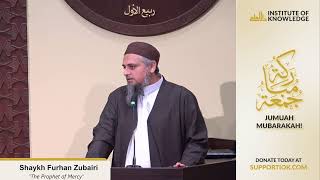 IOK · Diamond Bar, CA · Sep 19, 2026Learn the Prophet's life to love him“Love is something that grows through knowledge.”
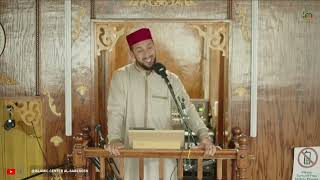
Be mindful of Allah, and He will protect you.9:56Al-Sabereen · Harrisburg, PA · Oct 24, 2026Defend the Prophet by living his example

No one can walk for you.5:06MCC San Diego · Rancho Bernardo, CA · Oct 3, 2026Prophetic mercy meets people where they are