
The Prophet met hardship with gratitude
“Looking at the Prophet was more soothing to me and more beautiful than looking at the moon.”
The Prophet Muhammad’s life of beauty, grief, persecution, and loss teaches believers to respond to hardship with gratitude, mercy, emotional honesty, and renewed love through studying his seerah and sending salawat.
The khutbah in 6 steps
- Introduces Rabi al-Awwal as the month of the Prophet’s birth and humanity’s movement from darkness to light.
- Uses Shama’il al-Tirmidhi to describe the Prophet’s physical beauty and the companions’ reverence for him.
- Recounts his orphanhood, persecution, the torture of companions, Ta’if, migration, battles, and family losses.
- Highlights his emotional honesty in grieving children and comforting Fatimah.
- Presents tahajjud and gratitude as his response to severe trials.
- Concludes by teaching the reward for sending salawat upon the Prophet.
In the khateeb's words
“Looking at the prophet Was more soothing to me And more beautiful Than looking at the moon”
“You've just lost a child This is not the place To be tough It's not that I'm a man No It's a part of being Insan”
“Whoever from my ummah Sends one salah Upon me Simply saying Sallallahu alayhi wa sallam Ten hasanat are increased Ten sayyiat are wiped out And ten darajat in Jannah Are elevated”
For the dinner table
The khutbah reminded us that the Prophet Muhammad endured orphanhood, persecution, migration, and the deaths of loved ones. He did not hide his grief or let suffering make him cruel; at Ta’if, he still hoped for guidance for the attackers’ children. His answer to blessings was worship and gratitude, and he kept turning to Allah in tahajjud. We can honor him by learning his seerah, accepting that tears are part of being human, and responding to hardship with mercy. Sending salawat upon him is also a simple act encouraged in the khutbah.
- How can learning about the Prophet’s hardships help us face our own difficult moments?
- What can we learn from hoping for good in people who have hurt us?
- What is one blessing we can thank Allah for tonight?
The masjid
More on the Prophets & seerah
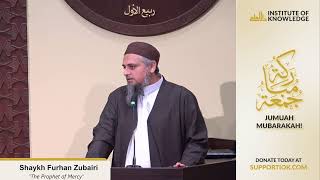 IOK · Diamond Bar, CA · Sep 19, 2026Learn the Prophet's life to love him“Love is something that grows through knowledge.”
Be mindful of Allah, and He will protect you.9:56Al-Sabereen · Harrisburg, PA · Oct 24, 2026Defend the Prophet by living his example
No one can walk for you.5:06MCC San Diego · Rancho Bernardo, CA · Oct 3, 2026Prophetic mercy meets people where they are