
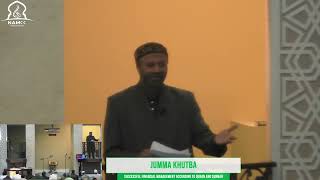
Wealth & charityFrom the masjid's own video, Oct 4, 2025.
Grow wealth lawfully and use it well
“Islam encouraged us to go and do well.”
In one sentence
Muslims should pursue and grow wealth lawfully, honestly, and compassionately, using it to fulfill religious obligations and benefit others rather than treating poverty as a virtue.
The khutbah in 5 steps
- Introduces the four questions every person will face, focusing on how wealth was earned and spent.
- Uses Khadija, Abu Bakr, Umar, and Uthman as examples of wealthy companions serving Islam.
- Explains through Surah al-Muzzammil that earning provision through trade is legitimate and encouraged.
- Warns against cheating in medicines, construction materials, and corporate decisions that harm families.
- Closes with supplications and reminders about justice, generosity, and remembrance of Allah.
Try this week
Review how you earn and spend money, using proper and ethical channels.
Pursue income and business growth without cheating or adulterating products.
Choose safe ingredients and materials even when cheaper alternatives increase profits.
As a business leader, consider the families affected before firing employees solely to improve financial numbers.
Use wealth to support Islamic causes, charitable work, and community benefit.
Sources the khateeb cited
Surah 73Used to explain that ordinary Muslims may seek Allah's provision through work and trade while maintaining worship.
Quotes
In the khateeb's words
“All what you have to do Is Make sure that you Go through Through the proper Channels To earn that Or spend it”
“Islam encouraged us to go and do well go and increase your income in your income statement but with one exception follow the principles of Islam”
Talk about it at home
For the dinner table
The khutbah teaches that Islam does not require Muslims to be poor or ashamed of earning money. Wealth is a trust: we will answer for how we earned it and how we spent it. The speaker used Khadija, Abu Bakr, Umar, and Uthman as examples of people who had wealth but used it honestly and generously. We should refuse cheating, unsafe products, and business decisions that needlessly harm families. Our goal is to grow in a principled way and let our resources serve Allah and people.
- What would an honest money story look like in our family?
- How can our family use what it has to help someone else?
- What might a fair business decision look like when profits could hurt families?
Keep listening
More on Wealth & charity
 15:41NAMCC · North Austin, TX · Oct 24, 2026Earn halal, spend wisely, and save“May Allah have mercy on a man who earns his money in a halal way, spends it economically, and saves some of it for a day that he needs it.”

Don't think that taking the easy way out or the shortcut is actually going to make you gain the rizq quicker.25:16MAPS Redmond · Redmond, WA · Sep 18, 2026Trust Allah's provision and find contentment

Everyone wants more Rizq, but no one wants accountability and responsibility, and you cannot have one without the other.19:34Qalam · Carrollton, TX · Sep 11, 2026More provision means more accountability