
Uhud teaches obedience over worldly desire
“Our relationship with Allah subhanahu wa ta'ala and the afirah, the here-after is much more important than this dunya.”
The Battle of Uhud teaches that victory comes from Allah and depends on obedience, prioritizing the akhirah over worldly desire, humility, patience, sacrifice, and sincere repentance.
The khutbah in 6 steps
- Begins with shahada, salawat, taqwa, and adherence to the Qur'an and Sunnah.
- Recounts the Battle of Uhud, including consultation, disobedience, pursuit of spoils, defeat, and the Prophet's injuries.
- Explains that Qur'anic accounts of Uhud provide timeless lessons rather than mere historical narrative.
- Applies the danger of prioritizing worldly life to worship, family education, and community conduct.
- Lists lessons involving obedience, detachment from dunya, testing loyalties, divine victory, humility, patience, and sacrifice.
- Closes with encouragement to repent, learn the Prophet's seerah, follow the Sunnah, and pray for Muslims.
In the khateeb's words
“Taqwa is loving Allah and having fear of Allah at the same time”
“we've got to be always knowing that our relationship with Allah subhanahu wa ta'ala and the afirah, the here-after is much more important than this dunya”
For the dinner table
The khateeb reminded us that taqwa means being mindful of Allah, with both love and fear of Him. Through the battle of Uhud, he taught the importance of following Allah and His Messenger and watching how attachment to worldly rewards can pull us away from that guidance. He asked families to give learning the Quran the same care they give to providing good food. He also reminded us of the sacrifices of the Prophet and his companions, and encouraged patience and humility instead of feeling better than others. He closed with hope: when we make mistakes, we can sincerely turn back to Allah, leave the sin, and ask His forgiveness.
- What could help you remember Allah when you are making a difficult choice?
- How could we make learning the Quran together a regular part of our family time?
- What does encouraging someone without acting better than them look like?
More on the Prophets & seerah
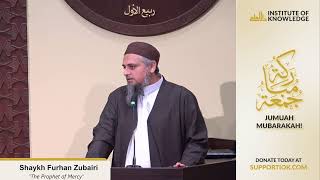 IOK · Diamond Bar, CA · Sep 19, 2026Learn the Prophet's life to love him“Love is something that grows through knowledge.”

Be mindful of Allah, and He will protect you.9:56Al-Sabereen · Harrisburg, PA · Oct 24, 2026Defend the Prophet by living his example
No one can walk for you.5:06MCC San Diego · Rancho Bernardo, CA · Oct 3, 2026Prophetic mercy meets people where they are