
Trust Allah when leaving haram work
“If I bypass that haram offer and wait for a halal offer, halal job, Allah will provide.”
Muslims should carefully assess whether their work directly supports wrongdoing, reject haram employment with trust in Allah's provision, and seek scholarly guidance for complex cases.
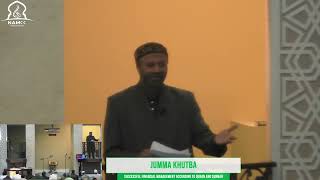
The khutbah in 6 steps
- Modern corporate work can involve weapons, interest, deception, and other unethical activity.
- Financial fear can make people wrongly attach their provision and career success to a particular job.
- The Quran reframes rizq as coming from Allah, while dependence on people and institutions harms spiritual and psychological well-being.
- Directly supporting a sinful company's purpose is impermissible, while indirect roles may be permissible and require case-by-case review.
- The story of Ali ibn Yakhtin illustrates how working within a flawed system may be justified when used to protect believers and resist injustice.
- The khutbah closes by urging purity, taqwa, honesty, and halal income in professional life.
In the khateeb's words
“Often what we do is we attach our rizq and our sustenance to that position.”
“Because the law of risk tells me that, look, if I bypass that haram offer and wait for a halal offer, halal job, Allah will provide.”
For the dinner table
The khutbah teaches that our income is part of our worship, so we should not treat any paycheck as worth compromising what is right. The speaker says we should examine whether our work directly supports interest, weapons, deception, or another sinful purpose, and ask a trusted scholar when the answer is unclear. We are reminded that Allah can provide a halal path even when turning down a job feels frightening. The story of Ali ibn Yakhtin shows that exceptional work within a flawed system must be judged carefully, especially by whether it helps protect people from injustice. We should aim to be honest, conscientious, and pure in our work as well as in the mosque.
- What makes it hard for someone to turn down a job that pays well?
- How can we tell whether our work is helping people or supporting something harmful?
- What could we do if someone asks us to lie or deceive others at work?
More on Wealth & charity
 15:41NAMCC · North Austin, TX · Oct 24, 2026Earn halal, spend wisely, and save“May Allah have mercy on a man who earns his money in a halal way, spends it economically, and saves some of it for a day that he needs it.”

Don't think that taking the easy way out or the shortcut is actually going to make you gain the rizq quicker.25:16MAPS Redmond · Redmond, WA · Sep 18, 2026Trust Allah's provision and find contentment

Everyone wants more Rizq, but no one wants accountability and responsibility, and you cannot have one without the other.19:34Qalam · Carrollton, TX · Sep 11, 2026More provision means more accountability