
Wealth is a test, not a measure
“Some of us live in this world as if it's forever.”
Wealth is a divine test that can produce arrogance and distance believers from Allah, so they must remain grateful and prioritize worship.
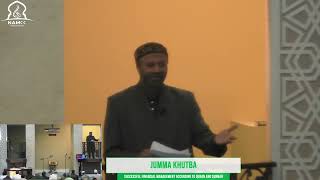
The khutbah in 5 steps
- Builds on Surah al-Kahf and introduces the fitnah of money.
- Explains the two-garden parable and wealth as Allah’s gift and test.
- Contrasts the wealthy man’s arrogance with his righteous companion’s reminder.
- Emphasizes mortality, human equality, and dependence on Allah.
- Applies the warning to work, migration, prayer, family, and delayed Hajj.
In the khateeb's words
“Some of us live in this world as if it's forever. Some of us are building like it's forever.”
“Some of us delay hajj. Some of us delay important stuff to take care of. Why? Because work, work, work, money, this, this, this.”
For the dinner table
Today’s khutbah reminded us that money and success are blessings from Allah, and they are also a test. In the story of the two gardens, a wealthy man became proud, looked down on his friend, and imagined that his wealth would never disappear. His righteous friend reminded him who created him and encouraged him to acknowledge Allah’s gifts, but the gardens were ruined and the wealthy man was left with regret. The khateeb encouraged us to say “Ma sha Allah, la quwwata illa billah” when we notice blessings we enjoy. As a family, we can practice gratitude, listen to good advice, and make time for Allah and one another while working for our needs.
- What blessing did you enjoy today, and how could you show Allah your gratitude for it?
- How could you help a friend who was making someone feel small because they had less money?
- What could we change this week to make more time for prayer and each other?
More on Wealth & charity
 15:41NAMCC · North Austin, TX · Oct 24, 2026Earn halal, spend wisely, and save“May Allah have mercy on a man who earns his money in a halal way, spends it economically, and saves some of it for a day that he needs it.”

Don't think that taking the easy way out or the shortcut is actually going to make you gain the rizq quicker.25:16MAPS Redmond · Redmond, WA · Sep 18, 2026Trust Allah's provision and find contentment

Everyone wants more Rizq, but no one wants accountability and responsibility, and you cannot have one without the other.19:34Qalam · Carrollton, TX · Sep 11, 2026More provision means more accountability