
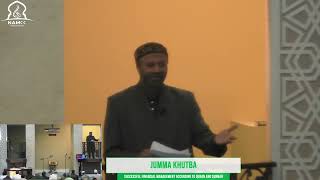
Wealth & charityFrom the masjid's own video, Aug 24, 2026.
Why Muslims should avoid riba
“Riba is one of these sins that completely destroys the foundations of a society.”
In one sentence
Riba (interest or usury) is a grave, often-overlooked sin that damages wealth, property ownership, and society, so Muslims should seriously strive to avoid it.
The khutbah in 6 steps
- Introduces riba as a severe and commonly overlooked sin
- Quotes the Quran’s command to abandon riba and its warning of war from Allah and His Messenger
- Explains how riba concentrates wealth and deepens debt
- Connects property and wealth to strong Muslim families and communities
- Urges everyone to make their best effort to avoid riba despite livelihood challenges
- Closes with a prayer for protection from riba
Try this week
Make your best effort to avoid riba.
Give the issue serious attention rather than dismissing it as unavoidable.
Ask Allah to keep you safe from riba.
Quotes
In the khateeb's words
“Imagine how tremendous a sin is if you're going into war with Allah and His Messenger by taking it up.”
“riba is one of these sins that completely destroys the foundations of a society.”
“Instead of owning a house or a car, anything basic, you, instead a bank owns it and you're going to pay that bank, for some people, their entire life.”
Talk about it at home
For the dinner table
Today’s khutbah warned that riba, meaning interest or usury, is a serious sin that many people overlook. The speaker explained that it can deepen debt, concentrate wealth, and make homes and other basic property harder to own. Because strong families and communities help Muslims live faithfully, this issue affects both worldly life and the hereafter. Even when avoiding riba is difficult because of livelihood, we should take it seriously, do our best to avoid it, and ask Allah for safety.
- What does the speaker say can happen when debt keeps growing?
- Why might owning a home matter for a strong family or community?
- What is one way our family can give this issue more attention?
Where it was given
The masjid
Keep listening
More on Wealth & charity
 15:41NAMCC · North Austin, TX · Oct 24, 2026Earn halal, spend wisely, and save“May Allah have mercy on a man who earns his money in a halal way, spends it economically, and saves some of it for a day that he needs it.”

Don't think that taking the easy way out or the shortcut is actually going to make you gain the rizq quicker.25:16MAPS Redmond · Redmond, WA · Sep 18, 2026Trust Allah's provision and find contentment

Everyone wants more Rizq, but no one wants accountability and responsibility, and you cannot have one without the other.19:34Qalam · Carrollton, TX · Sep 11, 2026More provision means more accountability