
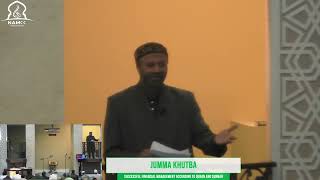
Wealth & charityFrom the masjid's own video, Feb 6, 2026.
Purify your wealth before Ramadan
“Allah SWT will question you twice from where you brought this money and where you spent that money.”
In one sentence
The khutbah teaches that Muslims must avoid unlawful wealth, honor others’ financial rights, and purify their income before Ramadan so their charity and worship are accepted.
The khutbah in 6 steps
- The Qur’an and hadith warn against consuming wealth unlawfully.
- The story of Saeed ibn Zayd illustrates the gravity of taking land or property unjustly.
- Borrowers must repay debts, document them, and seek extensions when genuinely unable to pay.
- Business partners must avoid betrayal because dishonesty removes blessing from partnerships.
- Wealth will be questioned twice, so Muslims should purify their income before Ramadan.
- The khutbah closes by urging lawful charity, Ramadan preparation, and prayers for Gaza and the Muslim community.
Try this week
Audit all personal, family, business, and institutional debts.
Write down debts and use witnesses so rights are not forgotten.
If unable to pay, contact the creditor and request more time rather than disappearing.
Return wrongfully held money and ask the affected people for forgiveness.
Keep business partnerships transparent and avoid taking partners’ money.
Before Ramadan, purify income and give charity only from lawful wealth.
Sources the khateeb cited
Quran 4:29Prohibits consuming one another’s wealth wrongfully.
Quran 2:282Instructs believers to document debts and use witnesses.
Quotes
In the khateeb's words
“whoever took the money of people intending to repay it Allah subhanahu wa ta'ala repays it on their behalf”
“Allah SWT will question you twice from where you brought this money and where you spent that money”
Talk about it at home
For the dinner table
This khutbah teaches that halal wealth is a matter of faith, not merely personal finance. We should return what we owe, write down debts, and seek forgiveness or a repayment plan when money is tight. We must be honest with spouses and business partners, because wealth gained through betrayal loses its blessing. As Ramadan approaches, we should purify our income, return people’s rights, and give charity from what is lawful and good.
- When might having access to someone else’s money become a test for us?
- How can we make sure we remember and repay money we owe?
- What is one way our family can prepare our wealth for Ramadan?
Keep listening
More on Wealth & charity
 15:41NAMCC · North Austin, TX · Oct 24, 2026Earn halal, spend wisely, and save“May Allah have mercy on a man who earns his money in a halal way, spends it economically, and saves some of it for a day that he needs it.”

Don't think that taking the easy way out or the shortcut is actually going to make you gain the rizq quicker.25:16MAPS Redmond · Redmond, WA · Sep 18, 2026Trust Allah's provision and find contentment

Everyone wants more Rizq, but no one wants accountability and responsibility, and you cannot have one without the other.19:34Qalam · Carrollton, TX · Sep 11, 2026More provision means more accountability