
How the Prophet transformed a divided world
“The birth of the Prophet sallallahu alayhi wa sallam was an opening and his mission was a new dawn.”
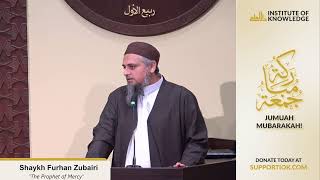
The khutbah argues that the Prophet Muhammad’s birth and mission transformed a world of shirk, oppression, tribalism, and ignorance into a unified ummah grounded in tawhid, justice, moral character, and knowledge.
The khutbah in 7 steps
- Describes pre-Islamic societies as marked by idolatry, oppression, immorality, tribalism, and ignorance.
- Presents the Prophet’s birth and mission as divine rescue and the formation of the Muslim ummah.
- Contrasts polytheism with belief in Allah’s absolute oneness, uniqueness, and sovereignty.
- Explains how Islam replaced tribal conflict with brotherhood, mutual sacrifice, and justice.
- Shows how taqwa replaced wealth, lineage, and status as the standard of honor.
- Highlights Islam’s restoration of dignity and rights to enslaved people and women.
- Concludes that prophetic guidance transformed ordinary people into moral leaders and builders of civilization.
In the khateeb's words
“But through Islam, they became loving brothers and united companions. They sacrificed for one another and they preferred others over themselves and loved for one another the good that they would love for themselves.”
“Who changed them? Who washed away from them the stains of adultery and jahiliyyah and the illusion of shirk? Who transformed them into an entirely different people? It was Islam.”
“The birth of the prophet sallallahu alayhi wa sallam was an opening and his mission was a new dawn.”
For the dinner table
The khutbah teaches that the Prophet Muhammad’s mission brought people from worshipping created things and living in injustice toward worshipping Allah alone and living by truth. Islam formed an ummah whose members cared for one another, stood for justice, and valued taqwa above wealth, lineage, or status. The sermon also highlights Islam’s defense of women’s dignity and rights, including life, inheritance, ownership, and education. Its final message is that revelation can transform ordinary people into people of virtue, knowledge, peace, and service. As a family, we can honor that message through prayer, honesty, family ties, good neighbors, and fairness.
- What is one way our family can stand for truth when it is difficult?
- How can we show care for someone who is struggling this week?
- Which quality from the khutbah, honesty, prayer, family ties, or good neighborliness, will you practice?
The masjid
More on the Prophets & seerah
 IOK · Diamond Bar, CA · Sep 19, 2026Learn the Prophet's life to love him“Love is something that grows through knowledge.”
Be mindful of Allah, and He will protect you.9:56Al-Sabereen · Harrisburg, PA · Oct 24, 2026Defend the Prophet by living his example
No one can walk for you.5:06MCC San Diego · Rancho Bernardo, CA · Oct 3, 2026Prophetic mercy meets people where they are