
Wealth is a test of gratitude
“We pray to Allah subhanahu wa ta'ala.”
Qur'anic stories of lost blessings, especially the man of the two gardens, teach that wealth is a test requiring humility, gratitude, remembrance of the Hereafter, and generosity toward others.
The khutbah in 6 steps
- Qur'anic stories are lessons about gaining or losing Allah's favor, not entertainment.
- Examples of lost blessings progress from individuals and families to towns, nations, and the whole world.
- The two-gardens story shows how wealth produces pride, false security, and doubt in the Hereafter.
- The believing friend reminds the wealthy man that creation, power, and possessions come from Allah.
- Listeners are urged to practice humility, gratitude, remembrance, and prayers for blessings upon others.
- The khutbah closes by emphasizing repentance, accountability for deeds, and reliance on Allah.
In the khateeb's words
“the purpose of the story to take lessons to see what others had done in order to attain either the favor of Allah subhanahu wa ta'ala or to be cursed”
“To relate things to Allah subhanahu wa ta'ala To humble ourselves To Allah subhanahu wa ta'ala To be grateful for the favors of Allah upon all of us”
For the dinner table
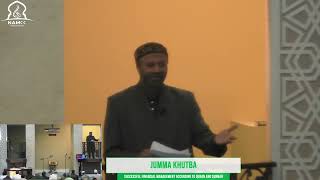
Today, Imam Mongy reminded us that Allah gives us stories in the Quran so we can learn how to live. In the story of the two gardens, a wealthy man became proud, looked down on his friend, and imagined his gardens would never disappear. He even doubted the Hereafter and assumed that his wealth meant he would have something better if he returned to Allah. His friend reminded him to recognize Allah as the source of his blessings and to say that what he had was by Allah’s will and power. We can practice this lesson together by thanking Allah for our blessings, treating others with humility, and asking Allah to bless them when good things come their way.
- What is one blessing you want to thank Allah for today?
- When you feel like showing off, what could help you remember where your blessings come from?
- Who could you make dua for when something good happens to them?
More on Wealth & charity
 15:41NAMCC · North Austin, TX · Oct 24, 2026Earn halal, spend wisely, and save“May Allah have mercy on a man who earns his money in a halal way, spends it economically, and saves some of it for a day that he needs it.”

Don't think that taking the easy way out or the shortcut is actually going to make you gain the rizq quicker.25:16MAPS Redmond · Redmond, WA · Sep 18, 2026Trust Allah's provision and find contentment

Everyone wants more Rizq, but no one wants accountability and responsibility, and you cannot have one without the other.19:34Qalam · Carrollton, TX · Sep 11, 2026More provision means more accountability