
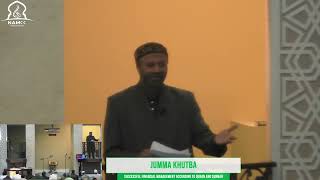
Wealth & charityFrom the masjid's own video, Nov 11, 2025.
Give charity before illness or death
“Do not say, I will do it. Do it at this moment.”
In one sentence
The khutbah argues that the most valuable charity is given promptly while one is healthy, financially able but still attached to one's money, rather than delayed until illness, death, or greater wealth.
The khutbah in 5 steps
- Introduces Abu Huraira's hadith on the most rewarding charity from Riyad al-Salihin.
- Explains that the Prophet's answer focuses on giving while healthy, reluctant, and worried about poverty.
- Applies the teaching to surplus money and the temptation to treat zakah as an investment.
- Contrasts an afterlife-oriented view of wealth with a worldly view that counts what is given rather than blessings retained.
- Urges immediate charity and warns against delaying until death, closing with a prayer for haste in goodness.
Try this week
Give sadaqah promptly while healthy, even when reluctant or worried about poverty.
Do not postpone charity until illness or the end of life.
Pay zakah when due instead of trying to reinvest it to avoid giving it.
Treat surplus wealth as an opportunity to invest in Allah's cause.
Sources the khateeb cited
Sahih al-BukhariUsed to argue that the best charity is given while healthy, attached to one's money, and fearing poverty, rather than postponed until death.
Quotes
In the khateeb's words
“He replied, that you should give a charity in a state, when you are healthy, and stingy, and fear poverty.”
“The best investment is to give it in the sake of Allah .”
“But he didn't look at what Allah blessed him and what he kept for himself.”
“Do not say, I will do it. Do it at this moment.”
Talk about it at home
For the dinner table
Today's khutbah taught that the strongest charity is often given when we are healthy, still attached to our money, and worried about having enough. The speaker reminded us not to wait until illness or the end of life, because tomorrow is not promised. He also warned against dressing up reluctance as a financial plan, especially when zakah is due. We can respond by giving what we owe promptly and treating extra wealth as an opportunity to invest in the hereafter.
- Why might giving be harder when we are healthy and still want to keep our money?
- What is one charitable action we can do today?
Keep listening
More on Wealth & charity
 15:41NAMCC · North Austin, TX · Oct 24, 2026Earn halal, spend wisely, and save“May Allah have mercy on a man who earns his money in a halal way, spends it economically, and saves some of it for a day that he needs it.”

Don't think that taking the easy way out or the shortcut is actually going to make you gain the rizq quicker.25:16MAPS Redmond · Redmond, WA · Sep 18, 2026Trust Allah's provision and find contentment

Everyone wants more Rizq, but no one wants accountability and responsibility, and you cannot have one without the other.19:34Qalam · Carrollton, TX · Sep 11, 2026More provision means more accountability