
Love the Prophet by living his mission
“If you really love Allah then you follow me.”
Loving Allah and honoring Prophet Muhammad means following his complete mission and character through disciplined human effort, not merely copying outward symbols or waiting for miracles.
The khutbah in 6 steps
- Connects Rabi' al-Awwal and Monday fasting with love for the Prophet.
- Explains following the Prophet as evidence of loving Allah while avoiding extremes in honoring him.
- Defines Sunnah as the Prophet's actions, commands, and tacit approvals, distinguishing his special practices from general guidance.
- Reframes Sunnah around the Prophet's mission, character, patience, grit, and sacrifice rather than only outward dress or rituals.
- Uses Zakariya, Ibrahim, and early Muslim history to argue that prophetic missions relied on human systems rather than planned miracles.
- Calls listeners to change their thinking, improve their conversations, contribute to the Ummah, and practice kindness and forgiveness.
In the khateeb's words
“that if you really love Allah then you follow me. Do itiba' of me. And if you do so, Allah will love you and He will forgive your sins.”
For the dinner table
The khateeb invited us to remember Prophet Muhammad, peace and blessings be upon him, with love and gratitude during Rabi‘ al-Awwal. He encouraged fasting when possible and doing good deeds, while respecting differences of opinion about marking the Prophet’s birth. He explained that following the Prophet’s path includes excellent character, patience, sacrifice, and concern for the wider community. A central message was that we should make dua and take practical steps toward our goals, rather than build our plans around an expected miracle. He closed by asking us to remember the Prophet’s kindness and be forgiving toward one another.
- What could you do tomorrow to practice the patience the khateeb described?
- What is one goal you make dua for, and what practical step could you take toward it?
- How could our family show more kindness when we disagree?
More on the Prophets & seerah
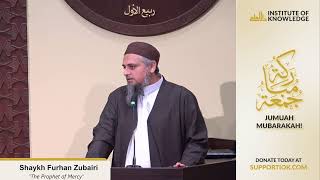 IOK · Diamond Bar, CA · Sep 19, 2026Learn the Prophet's life to love him“Love is something that grows through knowledge.”
Be mindful of Allah, and He will protect you.9:56Al-Sabereen · Harrisburg, PA · Oct 24, 2026Defend the Prophet by living his example
No one can walk for you.5:06MCC San Diego · Rancho Bernardo, CA · Oct 3, 2026Prophetic mercy meets people where they are