
Self-reliance brings honor to believers
“We should be able to invest in our own community.”
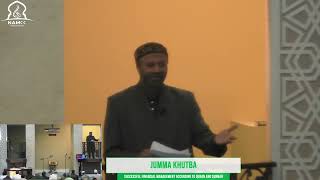
True honor for the believer lies in striving for self-reliance, working, providing for oneself and one's dependents, and supporting the community, while ultimately placing trust in Allah alone.
The khutbah in 8 steps
- Opening khutbah formula and hadith of the Prophet giving all he had to the Ansar
- Self-reliance builds personal strength, discipline, resourcefulness, and honor
- The believer's honor is independence from what others possess; the upper hand of giving is better than the lower hand of receiving
- Self-sufficiency extends to family and community: invest in Muslim businesses and take care of one another
- Asking for help is permitted when there is genuine need, asked with dignity, gratitude, and moderation
- Resist consumerism and social comparison; be content with Allah's provision
- Pair self-effort with tawakkul: ask Allah and rely on Him rather than on people
- Allah loves the righteous, self-sufficient, and obscure servant; closing supplication
In the khateeb's words
“what this means is to not have to rely on others to be able to accomplish things for yourself”
“we shouldn't have to rely on others we should be able to invest in our own community build up our own brothers and sisters build up our own businesses to be entrepreneurial in spirit”
“the more we're content with what we have the easier it is to be self-sufficient the easier it is to not have to ask and rely on others because you're content with what you have”
For the dinner table
The khutbah taught that self-reliance means trusting Allah first while making an honest effort to handle our responsibilities. Working, studying, caring for our families, and serving our community can all become acts of worship when our intentions are sincere. We should try to give and support others, while remembering that children, elderly people, disabled people, and anyone facing real difficulty may appropriately need help. When we truly need assistance, we should ask with dignity, gratitude, and moderation. Contentment, patience, and reliance on Allah free us from constantly comparing ourselves with others or chasing unnecessary possessions.
- What is one responsibility you can handle more independently this week?
- When has someone helped you, and how did you show gratitude?
- What is something you have that you can be thankful for instead of comparing yourself with others?
More on Wealth & charity
 15:41NAMCC · North Austin, TX · Oct 24, 2026Earn halal, spend wisely, and save“May Allah have mercy on a man who earns his money in a halal way, spends it economically, and saves some of it for a day that he needs it.”

Don't think that taking the easy way out or the shortcut is actually going to make you gain the rizq quicker.25:16MAPS Redmond · Redmond, WA · Sep 18, 2026Trust Allah's provision and find contentment

Everyone wants more Rizq, but no one wants accountability and responsibility, and you cannot have one without the other.19:34Qalam · Carrollton, TX · Sep 11, 2026More provision means more accountability